

Courtesy Photo: The author showing Billy and Gabby all the silt and organic matter that they are cleaning from the acequia.
Healing land and community
By Javier Vigil
In the mountains and valleys of Northern New Mexico, the relationship between people and the land has always been deeply connected. Our forests, rivers, and acequia systems are not just landscapes, they are living systems that sustain biodiversity, culture, and community. Today, one of the most important opportunities we have is reconnecting young people with these natural systems.
When children spend time in nature, something remarkable happens. They begin to notice the small details many adults overlook: The insects moving through the grass, the birds nesting along riverbanks, the wildflowers blooming along the acequia banks in spring. These observations are not just moments of curiosity—they are the beginning of ecological awareness.
Biodiversity refers to the variety of life in an ecosystem: plants, animals, insects, fungi, and microorganisms all working together to create balance. Healthy biodiversity strengthens ecosystems, making them more resilient to drought, disease, and environmental change. But biodiversity is not protected by science alone—it is protected by people who care about the land.
This is where youth play a vital role.
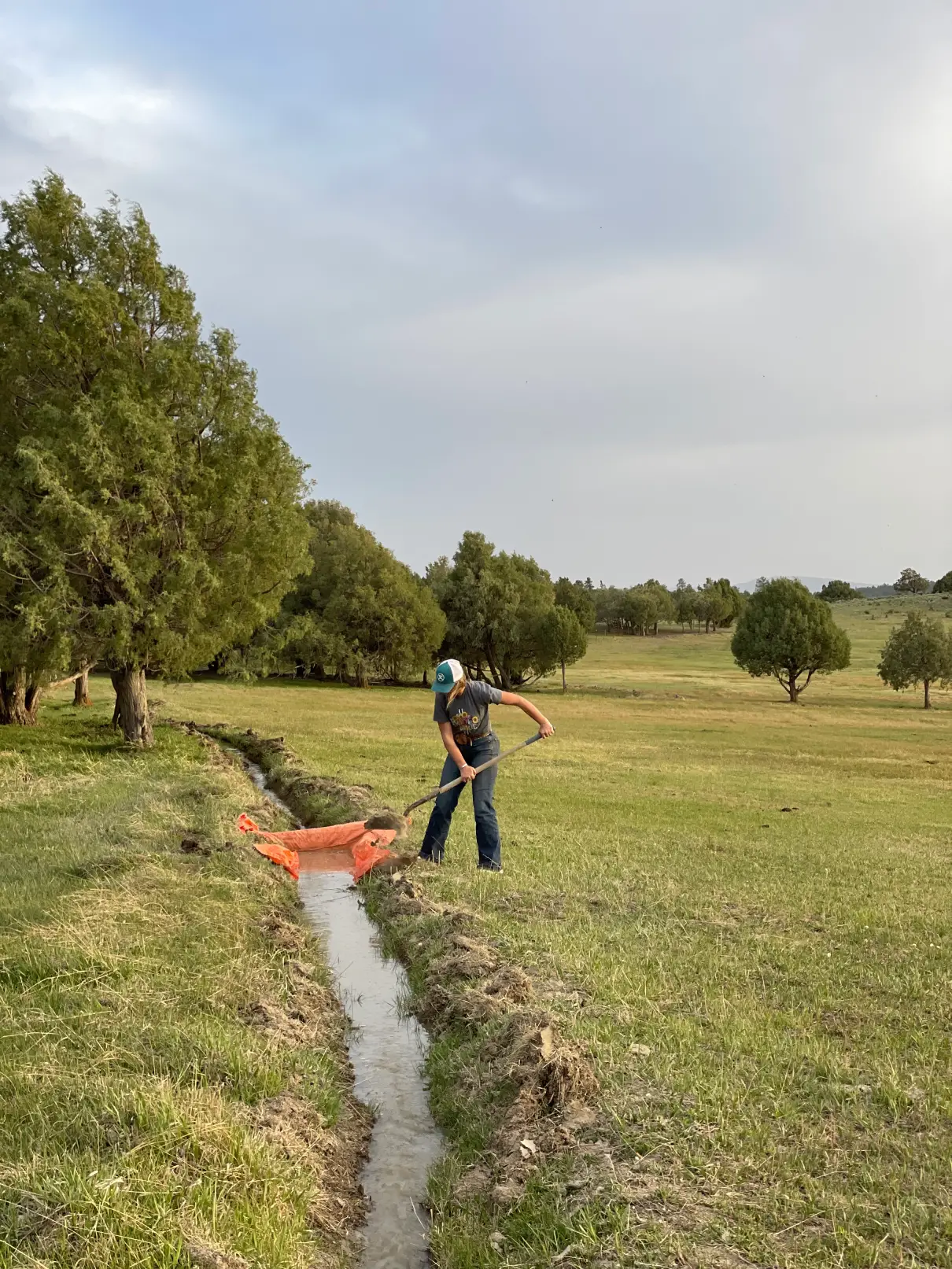
Courtesy Photo: Young rancher irrigating pasture in Northern New Mexico (Keelin Faulkner)
When young people are given the chance to plant native species, restore riverbanks, maintain acequias, or participate in watershed stewardship, they begin to see themselves as caretakers rather than observers. They understand that their actions—no matter how small—contribute to the health of the ecosystem around them.
In Northern New Mexico, these connections are also deeply cultural. For generations, families have worked the land, tended water systems and passed down knowledge about the seasons, soil, and wildlife. When youth reconnect with these traditions, they are not only learning about biodiversity, they are rediscovering a sense of belonging.
Scientific research increasingly confirms what many communities have long understood: Spending time in nature has powerful effects on human well-being. Exposure to natural environments reduces stress, improves mental health, and strengthens emotional resilience. For young people especially, nature provides a sense of calm and grounding that is difficult to find in today’s fast-paced, technology-driven world.
In many ways, biodiversity heals people just as much as people help protect biodiversity.
When a child spends time along a river, they learn that clean water matters. When they see pollinators moving through flowers, they understand the importance of protecting habitat. When they help plant trees or remove trash from a watershed, they feel the satisfaction of contributing to something larger than themselves.
These experiences build stewardship, and stewardship builds future leaders.

Courtesy Photo: The author cleans a ditch with young acequiros, Gabby and Billy.
Javier Vigil is president of Northern New Mexico Recreation & Outdoor Conservation Foundation.
Backyard Biodiversity articles are brought to you in partnership with local conservationists, farmers, scientists, and biologists, thanks to Chama Peak Land Alliance. The articles highlight the unique and special nature of our area, in the hope that each of us can and will improve our backyards and communities by ensuring biodiversity.