
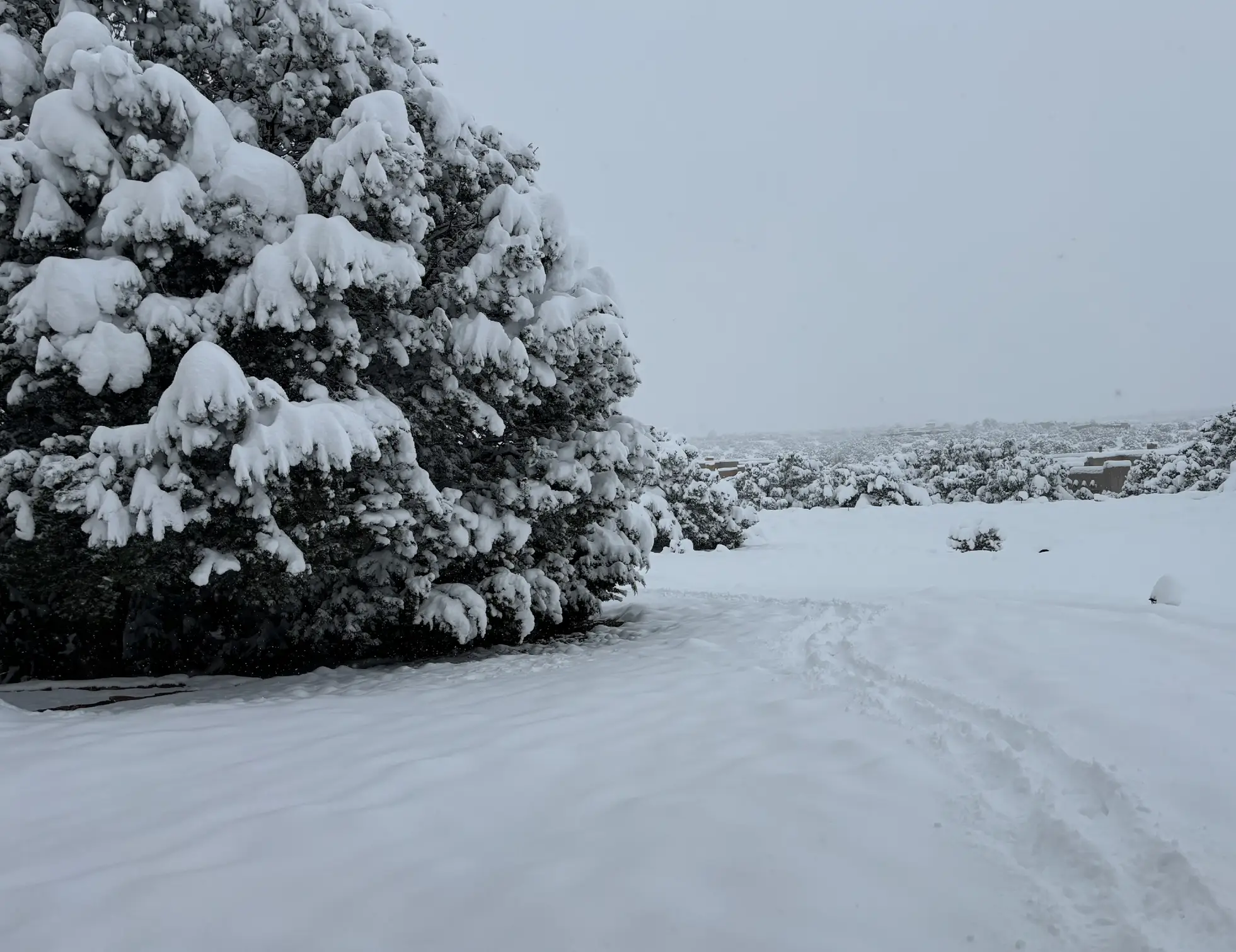
Courtesy photo: Winter Wonderland in Northern New Mexico.
Judy’s STEM Jam, connecting science and math to life, learning, and play
By Judy Reinhartz
Get ready for a fun filled excursion and pack layers of warm clothing, including coats, gloves, and boots, along with winter-themed books and a plan for enjoying indoor and outdoor activities. Be prepared to explore the scenic winter wonderland of Northern New Mexico with its unobstructive views.
Why is winter a favorite season? It is distinctive with its crisp, invigorating cold air, offering opportunities for cuddling up in cozy places and sipping hot cocoa complete with marshmallows, playing games, and enjoying beautifully illustrated children’s books.
Winter is a time to spark children’s curiosity and imagination as they discover new things and ponder the “I wonder” questions. The Caldecott book Owl Moon by Jane Yolen sets the stage for winter as children generate mental images of a young daughter and her father going owling at night. The cover tells it all and is a good place to start. Together they discover the magic of winter while walking wordlessly on the pristine snow that blankets their path. The silence is deafening, as only the father’s whoo-whoo-whoo echoes through the fresh chilly air. Repeated readings of this beautiful story rooted in themes of family, quiet magic, and owls will result. Sounds like a wonderful plan for taking your family on a night walk to see if you find owls and hear their calls. On other winter walks, look for animal tracks and compare the shapes, sizes, and depth of the prints in the snow.

Opportunities abound with sequencing the story events, role playing characters, investigating figurative language, and finding answers to why owls are nocturnal (appear at night), about their habitats (where they live), what they eat, and what they look like? The questions are almost endless. Grab some construction paper, markers, and scissors and create images of owls with simple shapes of circles and triangles, then tape them to a window to see the winter landscape. On Post-It notes write words and/or phrases, prompted by the frame “Owls can …, have …, are …. “
For families who are more adventurous, examine owl pellets (available at pelletlab.com/shop/pellets). They tell their own ecosystem story. Pellets are undigested materials of fur and bones that owls and other raptors (birds of prey) regurgitate. Dissecting pellets requires observation skills, patience, and hand washing before and after to puzzle out what was eaten, try building food chains and skeletons from the materials and bones found in them. For more information about owls, read White Owl, Barn Owl by Nicola Davies.
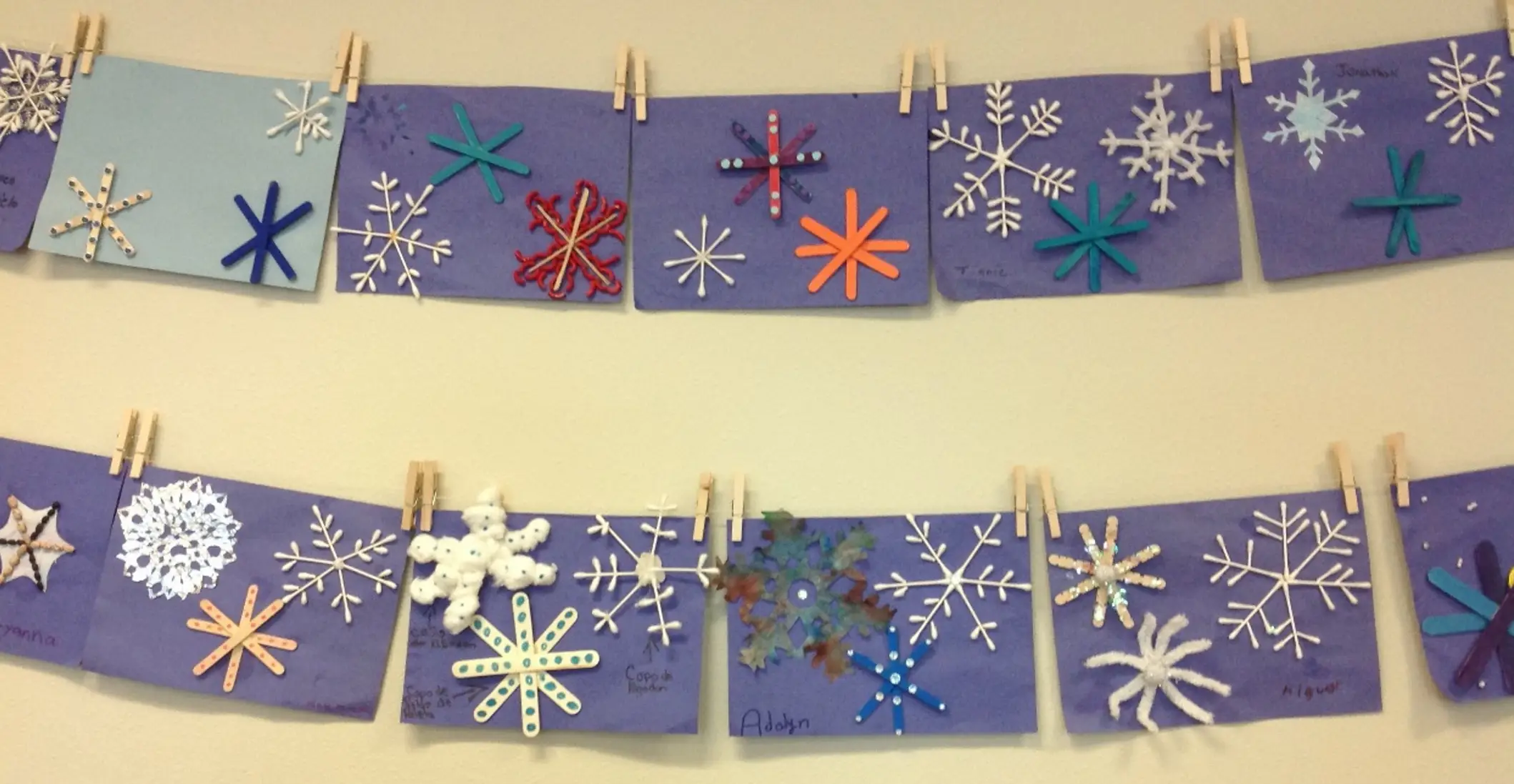
Courtesy photo: Be creative and design a unique snowflake.
Can you imagine a winter without snow? The soft carpet under our feet, gently covers the silhouettes of trees standing stately as living sculptures, and hides fallen leaves. If not, The Story of Snowby Mark Cassino is for you as is Snowflake Bentley, a Caldecott book by Jacqueline Briggs Martin. Having a snow sensory bin available with white rice, cotton balls, and small toy animals will generate more ideas regarding snowy environments.
Did you know that a snow crystal begins as a speck and forms into a six-sided shape? These authors take a complicated topic and make it easy to understand starting with the speck that gathers water vapor. Wilson “Snowflake” Bentley was the first to photograph snowflakes (1885) and to view their unique shapes (symmetry) with a technique he developed.
Take a deeper dive into fun snowflake crafts with a square piece of paper (or coffee filter), fold it into a triangle, cut off the edges, and see the resulting design; arrange Q-tips, pipe cleaners, or popsicle sticks in snowflake shapes on paper and add paint and sequins for color; have paper snowflake races by attaching pieces of metal to the snowflakes and use small magnets to move them along, the winner is the one that crosses the finish line first (ask: does the size and/or shape of the snowflake make a difference? If so, why?); or analyze real snowflakes using a magnifying glass and compare them to pictures of real ones. For more ideas go to stemactivitiesforkids.com/winter-stem-with-snowflakes/. The Snowy Day, a Caldecott book by E. J. Keats features simple pleasures of winter, making snow angels, knocking snow from tree branches, and thinking of ways to save snowballs.
What do you remember about winter? I remember sledding down steep hills and streets, ice skating, holding hands with friends and playing whip on a frozen lake (yes, I was the tail), and winning snowball size challenges (using a string to check the circumferences). Take a stroll down winter memory lane with your children with Kim Norman’s Ten on the Sled, a playful rhyming countdown, to see how many of the ten Arctic animals stay aboard going down a hill.
More winter STEM learning continues with measuring snowfall, building snow forts and mazes outdoors and indoors (with blankets and large blocks) fostering spatial, scale, and design thinking, blowing snow bubbles close to the ground made with warm water, dish soap, and sugar and watching them freeze before they pop, and painting murals on snow with pray bottles of water and food colorings. Don’t forget to collect scoops of clean snow for easy sweet treats. Enjoy snow cones, homemade ice cream with snow (cup of milk, ½ cup sugar, and vanilla stirring until creamy), and slushes made with favorite juices or maple syrup.
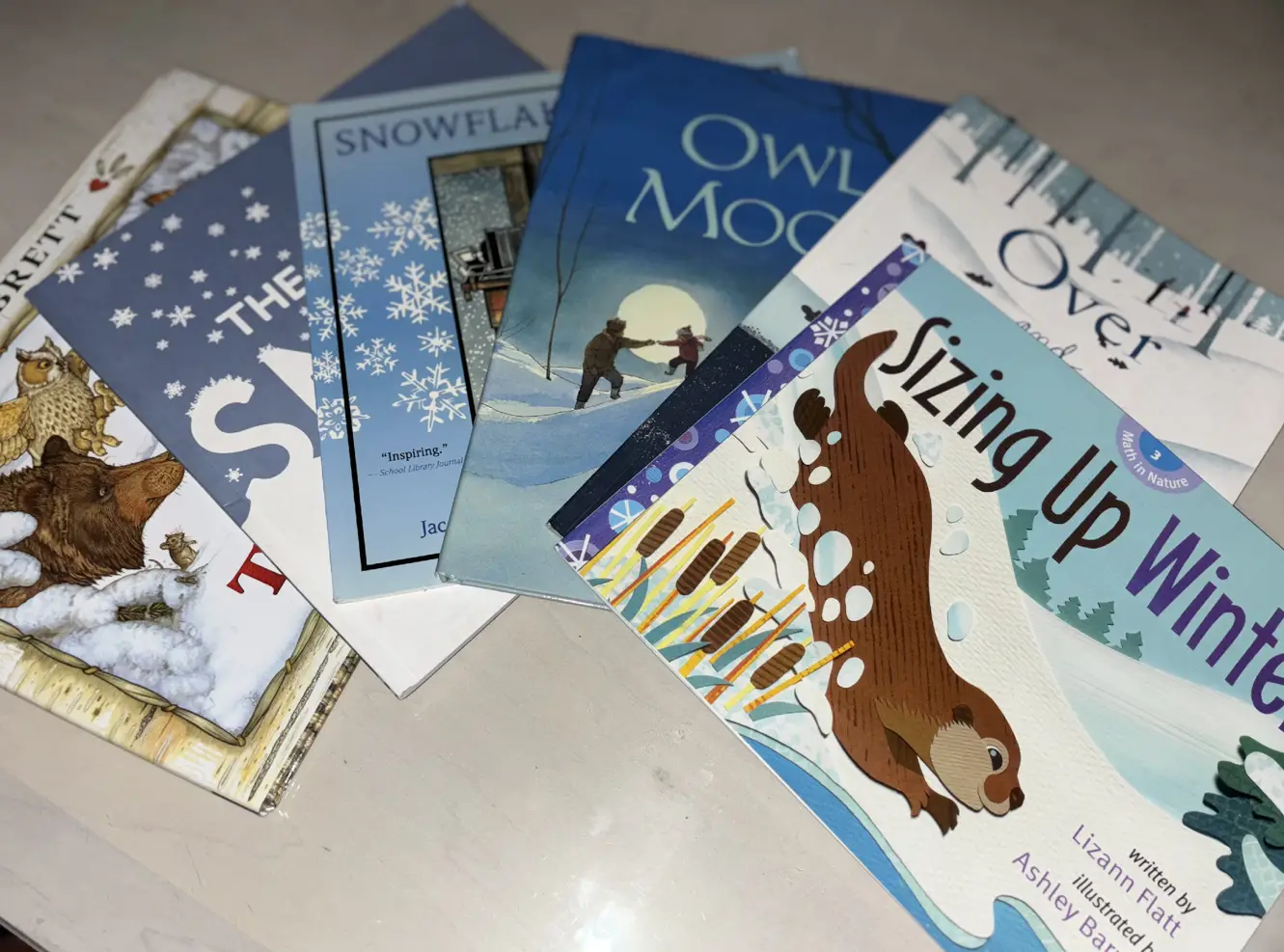
Courtesy photo: Highlighting books included in the article.
How do animals like whales keep warm in cold water? It’s all about their blubber; it acts like a built-in winter coat preventing body heat from escaping. Conduct a simple investigation and find out how insulation works with kitchen items, rubber gloves, Crisco, ice, Ziplock bags, thermometers, bowls, and ice. For directions, go to bit.ly/4iyRYed.
Our reading continues with Lizann Flatt’s Sizing Up Winter, framed in nature using a whimsical approach that gets children to look more closely at engaging illustrations of frozen rivers, snow tracks, and icy lakes with snowy owls, polar bears, and river otters for children to measure capacity, distance, mass, and time as they become more relatable concepts.
Now let’s go to the subnivean zone in Kate Messner’s Over and Under the Snow. Reading the lyrically rich text captures the beauty of winter to find out who lives, sleeps, hides, and plays there. Continue with Jane Simmons’ Waiting for Winter about how animals prepare their barrows and dens to huddle in and stay warm. The Little Fern’s First Winter by the same author features Mama Rabbit and little ones, introducing another natural habitat.
Keep track of your family’s (including pets) winter experiences; make a list and revisit it in April. Did you spend time outside, take walks, dream up snowy and frosty fun stories, think about people’s and animals’ resilience, write inspirational poems and songs about clouds, and view Mars, Jupiter, Polaris, and the constellation Orion in our night sky? For updated information, see timeanddate.com.
Winter is a special time for bundling up and leaning into cozy curiosity. Embrace the value of reading together and thrive in every environment, from the warmth of the toasty indoors to the crisp outdoors. Make lasting memories and look forward to the next exhilarating adventure—because the weather forecast shouldn’t stop your family from enjoying the season to the fullest.
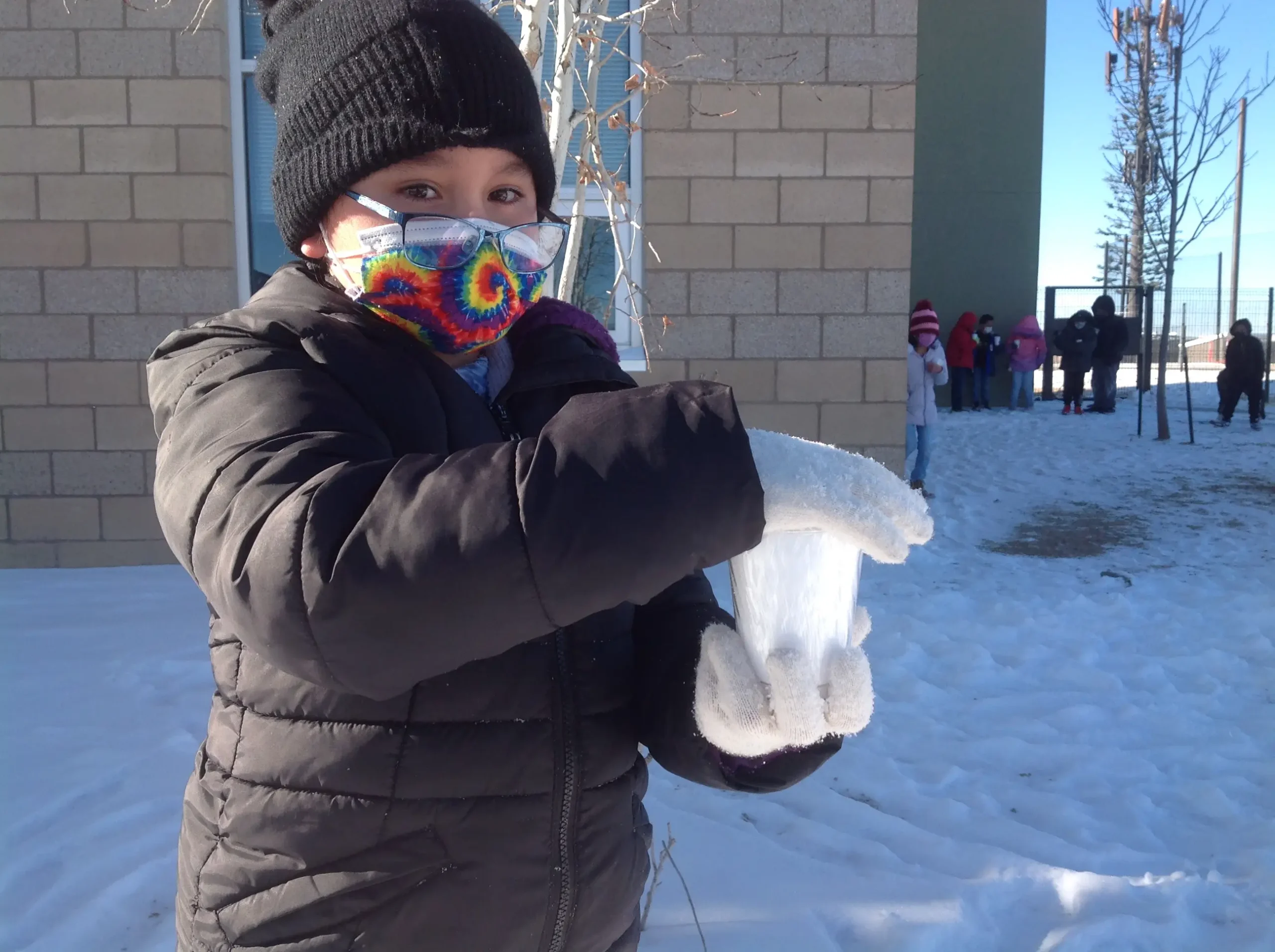
Courtesy Photo: Collecting and learning about the unique properties of snow.
Judy Reinhartz is a professor emeritus at the University of Texas at El Paso; coordinator for the Santa Fe Alliance for Science’s Adopt-A-School program; lead, literacy and math director, and coach with MathAmigos, and Tumbleweeds STEM education correspondent.