
Adobe stock photo.
There are moments in parenting that feel ordinary—routine even—until they aren’t
By Jen Paul Schroer
It was a typical school morning. I was driving my kids, Ryker (8) and Aviva (6), to school. They were in the backseat, deep in conversation, giggling and reciting lines from Mario Galaxy—their current obsession. Their laughter filled the car, the kind that makes you pause and think, This is what childhood is supposed to sound like.
Then the tone shifted.
Ryker asked Aviva about a character from a different show. I didn’t recognize it, but more than that, something about the way he asked caught my attention. It was subtle—just enough to register as different. When Aviva couldn’t remember what he was talking about, Ryker quickly said, “Never mind.”
And that should have been the end of it. But it wasn’t.
There’s a voice we all experience—especially as parents—some call it the Holy Spirit, instinct, or simply your gut. Sometimes it’s loud. Sometimes it’s barely there. That morning, it was persistent, and I’m grateful I listened.
I asked a few more questions.
Ryker told me it was from a show on Netflix. I remember the immediate wave of relief. I thought, Ok. Netflix. That’s safe. That’s curated. That’s “kids.” But that voice didn’t go away.
So I kept asking.
Then he said it had “a bunch of people dancing naked.”
WHAT.
I took a breath. A deep one. Said a quick prayer. And asked, carefully, “Was it a cartoon?”
“Yes.”
Trying to stay steady, I asked if it was on Netflix Kids.
“Yes.”
And then Aviva chimed in, matter-of-factly: “Oh yeah—and that girl that wants to be a boy.”
I paused.
Adobe stock photo.
We were pulling into the school parking lot. There wasn’t time to unpack what I was hearing—not in a way that was thoughtful or appropriate. So I did the only thing I could think to do in that moment.
I told them, calmly, that there are things on Netflix and YouTube that are not appropriate for kids their age and are not good for our eyes and minds. That we need to be careful about what we watch. I told them we would talk more after school—and that no one was in trouble.
The car doors closed. They skipped into school like nothing had happened. And I sat there.
Did I respond right? Should I have said something different?
Then I picked up my phone and called my husband, Justin. I told him everything. He said he’d check the viewing history.
In that moment, underneath the initial shock, there was something else—I was grateful. Grateful that my kids were talking. Grateful that they were honest. That trust and love had created space for hard conversations and real processing. Grateful that whatever this was, it hadn’t been hidden from me and that we would navigate it together.
But as I drove home, that gratitude sat alongside something heavier: A sense that I had failed to protect my children.
We all know there’s junk out there. We all know we need to be careful. We tell ourselves that if we use the “kids” settings, if we monitor occasionally, if we’re generally aware, then we’re doing enough.
But that morning exposed something uncomfortable: I wasn’t as in control as I thought I was. And I don’t think I’m alone in that.
Across the country—and here in New Mexico—parents are navigating a completely different landscape than the one we grew up in. The threats are not just “out there” anymore. They are embedded in the very platforms we allow into our homes.
In March 2026, a Santa Fe jury awarded $375 million in damages in a landmark case against Meta, tied to child exploitation and platform negligence. It was a powerful acknowledgment of what many parents already feel: The systems designed to connect us are not always designed to protect our children.
At the same time, renewed scrutiny around Jeffrey Epstein and his New Mexico connections has reminded us that exploitation is not hypothetical. It is real. It is organized. And it often hides in plain sight, masked by trust, influence, or even entertainment.
Each generation faces new parenting challenges. But this one feels different. Because the access is immediate. And it’s everywhere.
My kids are still young. But they already ask for smartphones. They want to watch videos on my phone. They want access. They want what they see older kids—and adults—have. And we resist. Often. At dinner. In the car. At home.
But I know the day is coming when we will hand them their first phone. And if I’m honest, it feels more intimidating than handing them car keys. Because a car has rules. It has boundaries. It has visible risks.
A smartphone? That’s direct access to my children—their minds, their world, and everything that shapes—or could exploit—them.

Adobe stock photo.
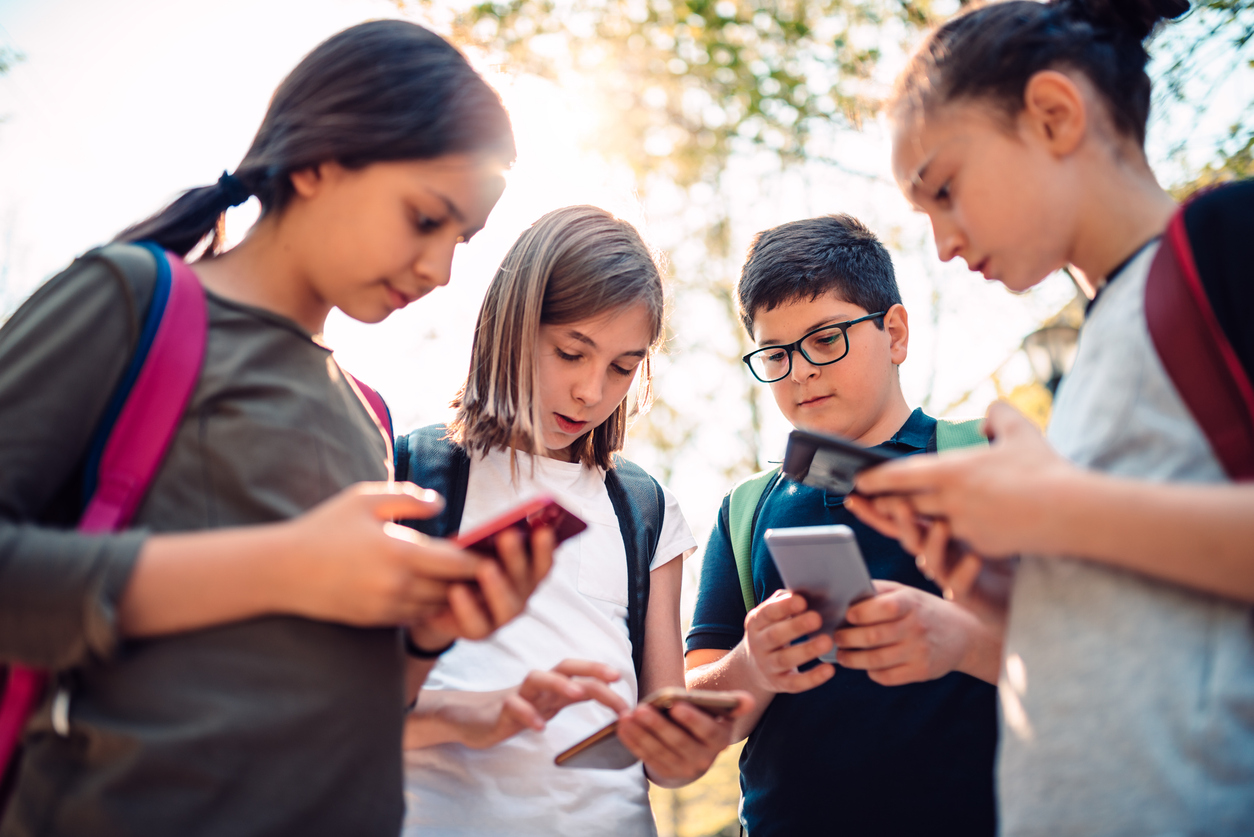
Predators don’t have to be in the same room, the same school, or even the same state. They can enter our homes—our children’s bedrooms—through a screen. If I struggled to catch something inappropriate on a “kids” streaming platform, how am I supposed to navigate social media? Online gaming? Messaging apps? Platforms I don’t even know exist or have not been invented yet? And then there is AI.
And the truth is, I don’t feel prepared. Not to monitor it all. Not to explain it all. Not to protect against all of it. And I know, I cannot protect them from all of it. That’s a hard thing to admit as a parent.
What surprised me most wasn’t just what my kids saw. It was how quickly it surfaced, and how easily it could have been missed.
If I hadn’t asked one more question…
If I had ignored that small voice…
I wouldn’t have known. And that’s what stays with me. Because how many other moments have I missed? How many things have they seen, heard, or internalized that I don’t know about?
That realization brings a mix of emotions—fear, frustration, anger. I am angry that something marketed as “safe” introduced content that my 6- and 8-year-old were not ready to process. I am frustrated that the burden falls so heavily on parents to filter, monitor, and decode an ever-changing digital world.
And yes, I felt guilt. But sitting in that, I’ve started to see something else:
Maybe this wasn’t just a failure. Maybe it was a warning. A moment to wake up—not in panic, but in purpose.
After that morning, I started looking for resources. What I found was… not enough. Especially at the local level. There are some national tools worth exploring:
- Common Sense Media Reviews, age-based content guidance, and digital citizenship resources
- NetSmartz Safety videos and training for kids and parents
- Bark AI-powered monitoring for texts, apps, and platforms
- Family Online Safety Institute Research and tools for digital parenting
In New Mexico, there are emerging efforts through schools and law enforcement, but there is a clear gap in accessible, proactive training for families. And that’s a problem.
Because digital safety today is as essential as any other form of education we provide our kids. It is directly connected to conversations about identity, boundaries, relationships, and yes—even sex education.
Topics like:
- Sharing nude images
- Online grooming
- Peer pressure through digital platforms
- Exposure to adult content
These are not “later” conversations anymore. They are now conversations.
I wish I could say I handled that moment perfectly. I didn’t. I reacted in real time, doing the best I could with the information I had. And maybe that’s what parenting in this era looks like.
Not perfection. But presence. Listening to that voice. Asking one more question. Creating trusted space for loving conversation, even when it’s uncomfortable. Protecting innocence where we can. And preparing our kids for the world we know they will face.
I’m still angry that their innocence was disrupted by something as trivial, and preventable, as a cartoon on a kids platform. But I’m also grateful. It forced me to pay attention, to lean in, and to start conversations I might have otherwise delayed. It reminded me that this is not a passive role—it’s active, it’s evolving, and it requires all of us to step up, not just as parents, but as a community.
Because if we don’t teach our kids how to navigate this world, the world will teach them instead. And that is a lesson I’m not willing to leave to chance.
Editor’s Note: We have contacted Netflix to request that this program be reviewed and removed from the Netflix Kids category.
Jen Paul Schroer is a dedicated community leader with a proven track record of driving positive change. As a three-time Senate-confirmed cabinet secretary, trade association CEO, and chamber of commerce executive director, Jen has extensive experience in both the public and private sectors. As a wife and mother of two, Jen is deeply committed to improving the local community and supporting the economic well-being of families as the editor and owner of Tumbleweeds Magazine and other ventures.