
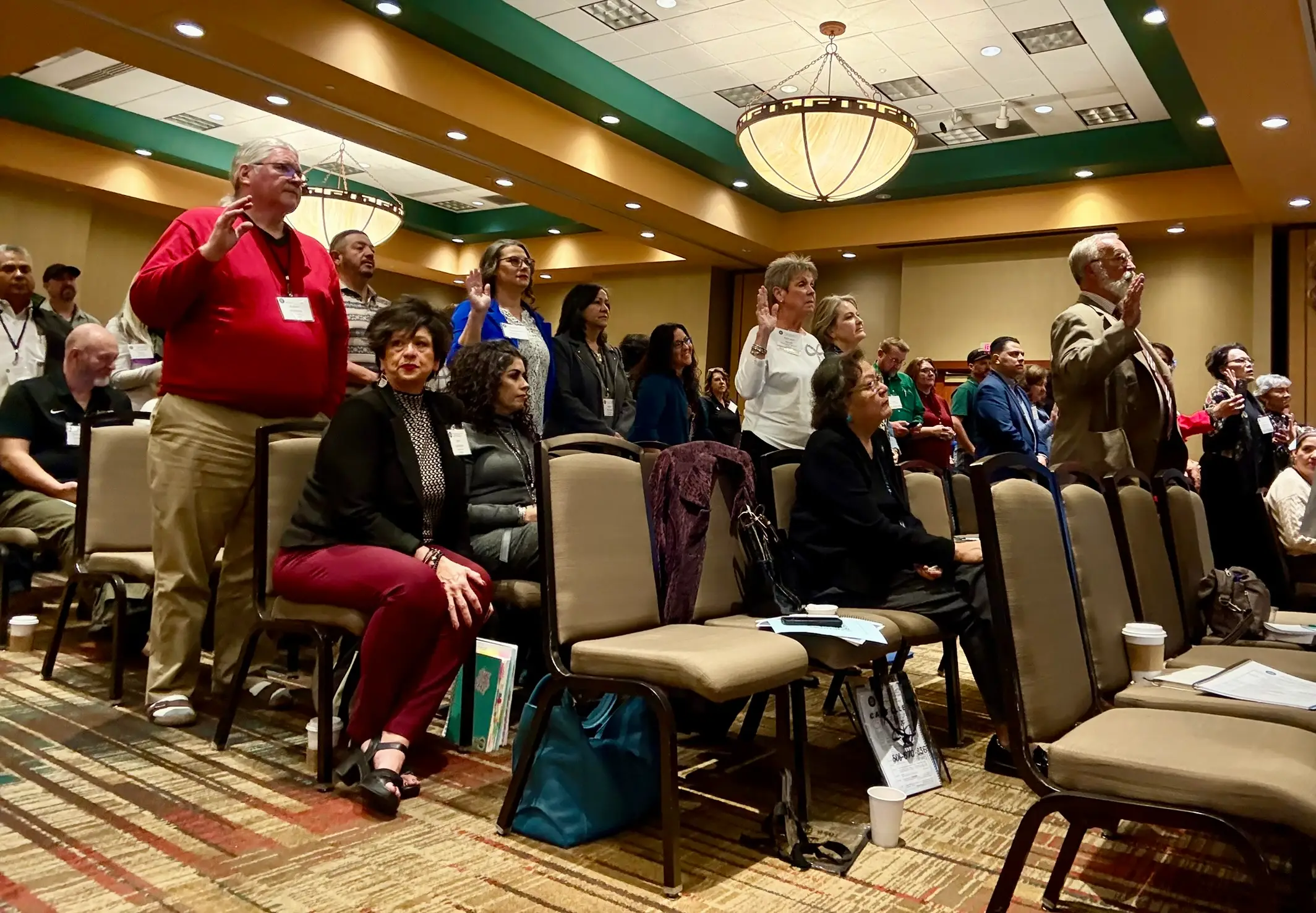
Courtesy Photo: Newly elected New Mexico school board members take the oath of office on Dec. 5.
Think New Mexico looks toward what’s merry and bright for our education system
By Mandi Torrez
Education leaders, advocates, and stakeholders agree that there’s never been a better time to meet the moment for New Mexico’s education system. The opportunity to lead the way in multicultural education comes on the heels of the urgent need to address concerns that wait not so patiently at our doorstep: academic and social learning time lost post-pandemic, teacher shortages in math, science and special education, student mental health and disengagement, the need for improved culturally relevant teacher and administrator preparation, and the Martinez-Yazzie consolidated lawsuit, to name a few.
New Mexico has seen some investments starting to pay off. However, the return on those investments has been slow. Statewide reading proficiency has crept up to 44% across all grade levels with a 10% increase overall since 2022. This is a result of millions of state and federal dollars being allocated for teacher training, coaching, summer school, and $30 million for a new literacy center to be located in Albuquerque.
Math levels remain stagnant at 25%, with special education students only reaching 8.5% proficiency and for English learners reaching only 9.8%.
While test scores offer a narrow snapshot of our students, we know there is still much work to be done. It will require collaboration and coalition building, targeted funding, accountability, and a consistent and shared vision of what is possible statewide.

The good news is that we already have promising models coming online throughout the state that refocus efforts on meeting basic student needs and moving students toward more relevant learning and life skills. For example, innovative staffing models attempt to move away from the one teacher, one classroom model while offering teachers support with collaboration and in classroom coaching. Work-based learning and career and technical education continue to offer hands-on experiences. Both receive funding but could be better studied statewide to determine student impact.
A state program will pay unhoused high school students $500 a month if they maintain a 92% monthly attendance rate, complete all their school work, and participate in academic counseling. The students will also take financial literacy courses each month from partnering banks.
And on that note, 49 out of 89 school districts have made financial literacy a graduation requirement. Think New Mexico has built a coalition of banks, credit unions, nonprofits, state leaders, and educators committed to making learning relevant while supporting teachers along the way, including offering free training to financial literacy teachers from across the state.
Training for school board members is also a focus for the state. Think New Mexico is working with partners like the New Mexico School Board Association to make more varied opportunities available to board members, while also increasing the quality and expanding content to help board members make informed decisions on budgets, policies and accountability for their return on investments.
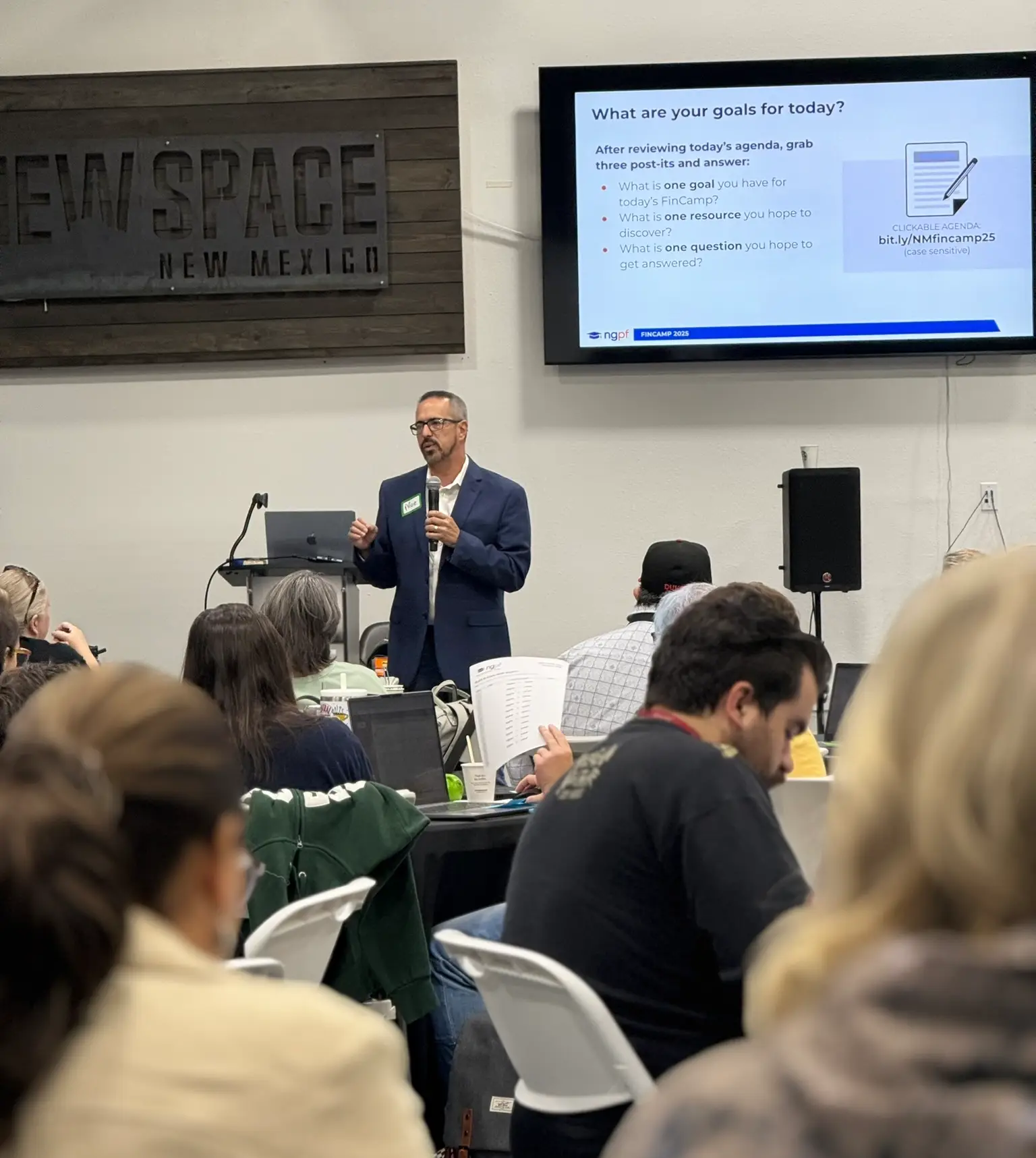
Courtesy Photo: New Mexico State Senator Moe Maestas speaks in Albuquerque on Sept. 18.
The challenge is to monitor success and scale up to ensure equitable access to relevant learning experiences, especially for our rural students and those populations named in the Martinez-Yazzie lawsuit: students with special needs, low-income students, English learners, and Native American students.
This fall the state has been under court order to develop an action plan to address what the courts have deemed as the state’s failure to provide an adequate public education for our students in those four named groups. The nearly 200-page comprehensive plan addresses four critical areas: equitable access to high-quality instruction, equitable access to well-prepared culturally and linguistically responsive educators, equitable access to academic, social, well-being and behavioral services and effective funding, support and accountability to drive systemic improvement.
Many advocates and content experts believe the plan still falls short on metrics, specific budget allocations, and specific actions. The plaintiffs and their partners have also asked for inclusion in the process of building a plan together.
In the meantime, the legislative process rolls on and the proposed budget from the PED includes increases in key areas such as professional development, tutoring, and community schools, including:
- $16.5M for teacher, administrator, and school board training (an increase of 9%)
- $35M for summer programs and in-school tutoring (an increase of 21%)
- $7M for community schools (an increase of 16.7%)
- $5M for high-impact tutoring (an increase of 400%)
- $7.7M for STEAM (Science, Technology, Engineering, Art, Math), artificial intelligence and outdoor classrooms (an increase of 15.6%)
The Legislative Education Study Committee (LESC) and the Legislative Finance Committee also put forth proposed education budgets, which will all be considered before a final budget is approved during the next 30-day legislative session that begins in January.
The LESC, made up of legislators from the Senate and the House of Representatives, is considering endorsing the following legislation for the upcoming session:
Attendance Provisions for Students with Severe Medical Conditions: This would amend the Attendance for Success Act to ensure students with disabilities are not penalized for absences related to services outlined in their Individualized Education Program (IEP), such as for medical appointments or hospitalization. It also directs the Public Education Department to issue guidance on allowable absences to protect students receiving necessary medical care.
Comprehensive Approach to Math Instruction: This proposal creates a statewide framework for math instruction, including early screening and intervention plans. It also would require timely notification of learning needs to parents. By the 2027-2028 school year, districts must implement professional learning plans aligned with these new state standards to improve student outcomes.
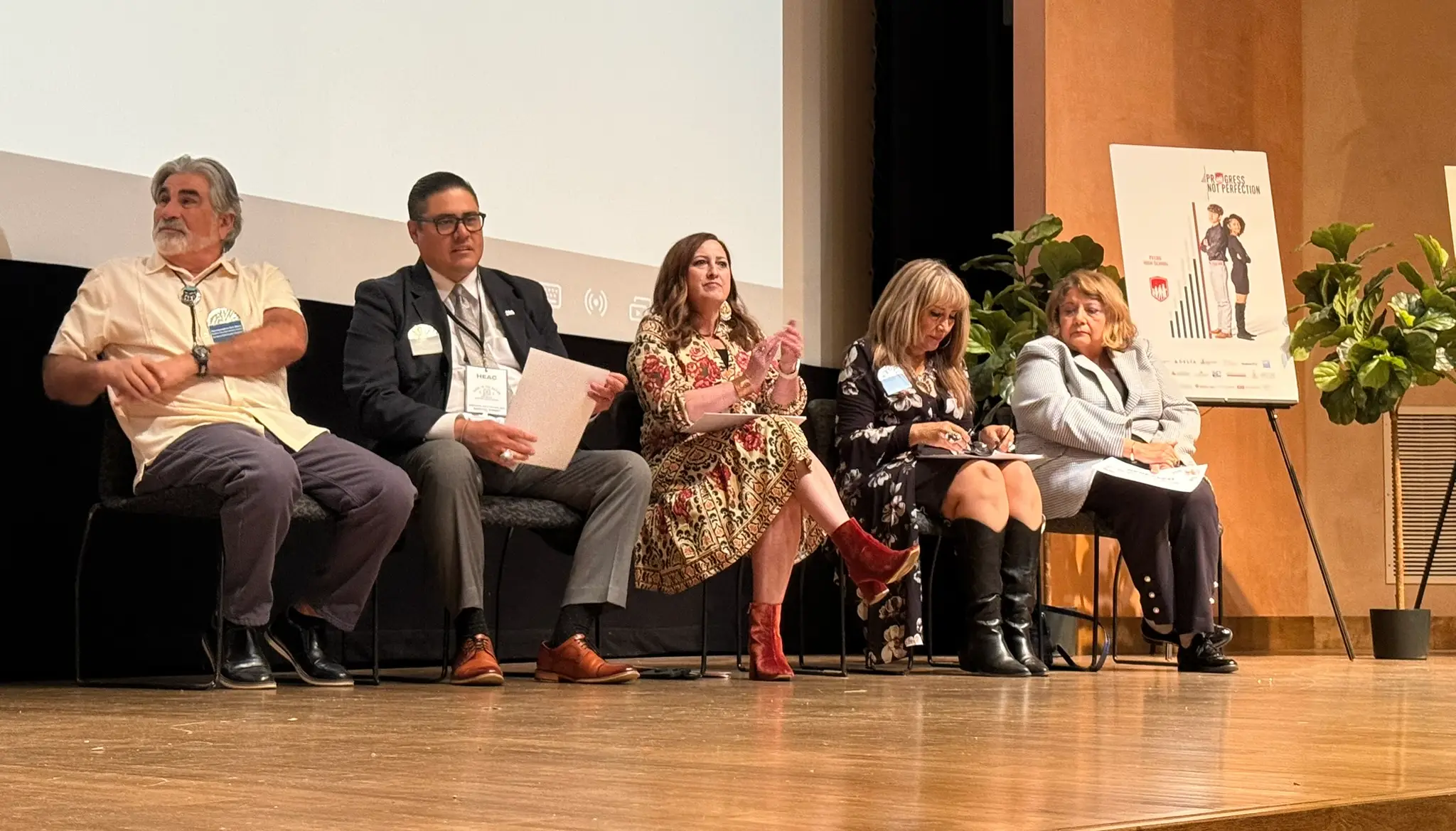
Courtesy Photo: Education leaders celebrate 15 years of the Hispanic Education Act.
Allowable Responses to Student Behavior: This bill strictly defines permissible restraint and seclusion practices and prohibits dangerous methods such as chemical or prone restraint. It allows physical restraint only when there is an imminent danger of serious physical harm and enhances training and reporting requirements for school staff.
Literacy Instruction and Supports: The High-Quality Literacy Instruction Act mandates that all K-12 literacy instruction and interventions use materials grounded in the science of reading. It also establishes a reading assessment system, parent notification requirements for reading difficulties, and a coaching model for schools with low reading proficiency.
Office of Special Education: This legislation codifies the Office of Special Education within the Public Education Department to enforce laws and ensure consistent services for students with disabilities from birth through college transition. It establishes a deputy secretary of special education position and requires annual reporting on the status of special education statewide.
Suspension of Individual School Board Members This proposal authorizes the Public Education Department Secretary to suspend individual school board members for willful failure to perform duties or misconduct, offering a targeted alternative to suspending an entire board. The bill establishes due process rights for the accused member and limits the secretary’s interim power to voting only in the event of a deadlock.
Increasing the Employer Share of Health Insurance Premiums Beginning in fiscal year 2027, this bill requires all school districts and charter schools to contribute at least 80 percent toward the cost of employee health insurance premiums. The initiative requires a state appropriation of approximately $73.2 million and mandates a study on the future sustainability of public school insurance programs.
Strengthening Teacher Preparation and Residencies This bill updates the Teacher Residency Act by tying resident stipends to statutory minimum teacher salaries and allowing participants to fulfill their service commitment at any public school in New Mexico. It also clarifies that partner districts are expected, but not required, to hire residents upon completion of the program.
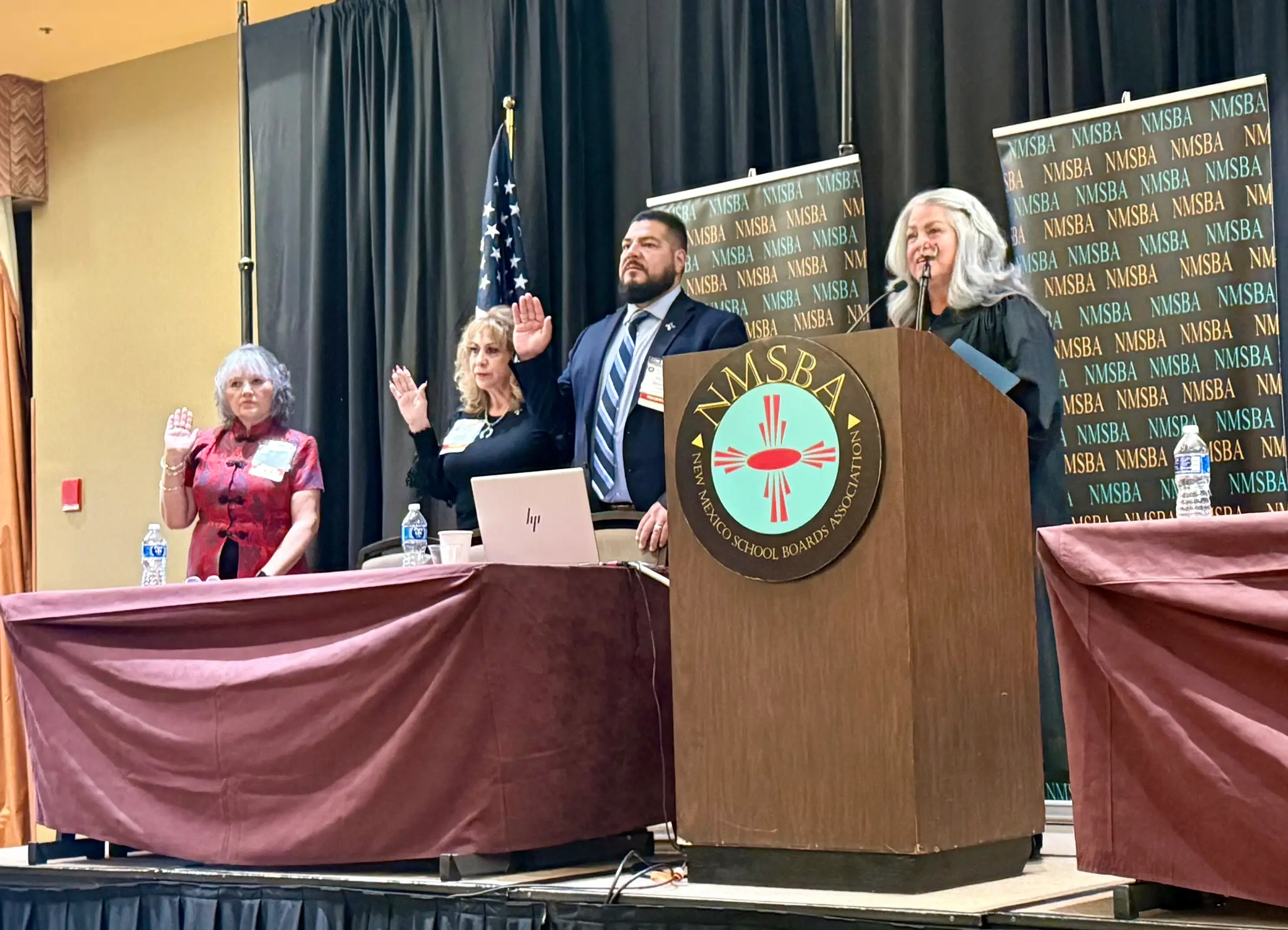
Courtesy Photo: Rio Arriba County Magistrate Judge Alexandra C. Naranjo reads the code of ethics to New Mexico school board members.
Mandi Torrez is the Education Reform Director for Think New Mexico. Working on issues that impact the K-12 public education system. She serves on the Hispanic Education Advisory Council and is on the Board of Directors for the Golden Apple Foundation of New Mexico. She is a former elementary teacher and was the 2020 New Mexico Teacher of the Year.