

Courtesy Photo: Living our best life sailing on Puget Sound this summer
Upstairs, downstairs and everything in between
By Jen Paul Schroer, Editor, Tumbleweeds Magazine
EDITOR’S NOTE: This column contains frank discussion of periods, hormones, breasts, vaginas, rage, hair loss, and other assorted middle-aged lady-part shenanigans. Readers who prefer to believe women transition gracefully from having babies to becoming grandmothers with nothing particularly interesting happening in between should proceed with caution.
As a young girl, I remember my mom handing me a book explaining how my body was going to change and that, eventually, I would get my period. She was clearly uncomfortable, and we never really talked about it afterward. Then came the awkward sex ed classes at school, complete with nervous giggles as we learned about periods, puberty, and boy parts. None of it was particularly comfortable, but at least when I got my first period, I knew what was happening. I had been warned. I was mentally prepared.
Fast-forward a few decades. I’m 47, and for the past six or seven months, I’ve been learning an entirely new vocabulary—only this time, nobody handed me the book.
Perimenopause. Estrogen. Progesterone. Brain fog. Frozen shoulder. Rage.
I can’t go back and ask my mom what this stage was like for her. She now has dementia, so that part of her story—and what she might have told me about her experience—is something I may never know. There is something especially strange about reaching a stage of womanhood your mother went through and realizing you can no longer ask her, Did this happen to you, too?
So I’ve started talking openly with my girlfriends and documenting my own experience for my daughter, hoping that when her time comes, she won’t have to figure it all out from scratch. In my conversations with girlfriends, I keep hearing the same question: Why didn’t anyone tell us about all of this?
We were prepared for puberty. We talked about pregnancy. We knew our periods would eventually stop. But nobody really explained what might happen in the years leading up to menopause, what to look for, what questions to ask, or—perhaps most importantly—what we could do about it.
Basically, my body held a staff meeting, rewrote the operating procedures and forgot to put me on the calendar invite.
A good friend has a simple and silly way of talking about women’s bodies: There are the upstairs lady parts and the downstairs lady parts. Upstairs is above the waist. Everything gynecological is downstairs. It makes conversations that can otherwise feel awkward a little easier—and a lot funnier.
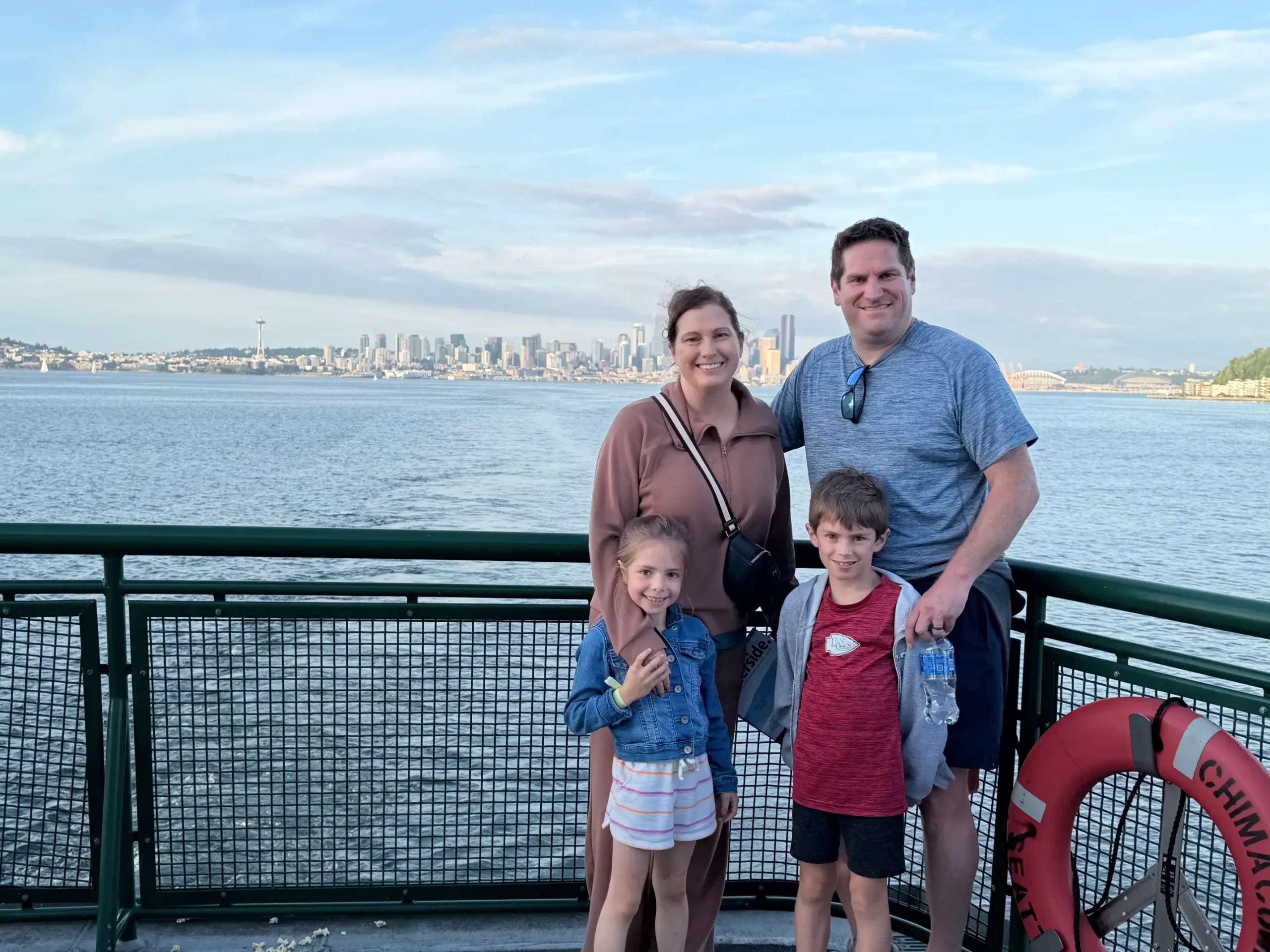
Courtesy Photo: Enjoying a beautiful day in Seattle during our family vacation this summer.
What I’ve learned is that perimenopause is not particularly respectful of floor plans. It can affect the upstairs lady parts, downstairs lady parts and seemingly every room in the house—hair, skin, sleep, libido, periods, joints, memory, energy, and mood. In my case, there were frozen shoulders, periods that stopped consulting the calendar, and something I can only describe as period flu. Basically, every day that ended in Y became an unexpected and unwelcome adventure.
I thought I knew what menopause looked like: Hot flashes, night sweats, and fighting everyone in the house over the thermostat. What I wasn’t prepared for was the crazy complexity of this phase of women’s health. When seemingly unrelated things start happening at once, you wonder whether you suddenly have 12 different problems. Do I need a dermatologist? An orthopedist? A sleep specialist? A therapist? A better moisturizer? More vitamins? Less wine? More wine? 😉
I didn’t really understand I was in perimenopause until January 2026. Before that, I had gone to my doctor because I knew I wasn’t feeling like myself. My doctor told me my blood work was normal and suggested that, as a busy working mom, maybe I simply needed to slow down.
I know the advice was probably well-intended. But what I heard was: You’re doing too much. You’re getting older. This is how you feel now.
It felt like my fault that I didn’t feel good—and that the solution was to expect less from my body and maybe a little less from my life.
For those who know me, you already know how that went.
I did not slow down.
Instead, I went on a mission. Red-light therapy. Cryotherapy. Acupuncture. Supplements. Meditation. Exercise. Doctors. Research and more research. I essentially turned myself into a middle-aged science experiment. Some things worked. Some didn’t. But somewhere along the way, I stopped asking, How do I learn to live with feeling worse? and started asking, Why do I feel worse, and what can I do about it?
That shift mattered.
Because sometimes even doctors don’t seem sure what to do with all of this. Is it hormones? Is it age? Is it stress? I even had one doctor tell me I was “just being vain” when I talked about some of the changes I was experiencing.
That one stuck with me.
Wanting to understand why your hair is thinning, why your face seems to be changing rapidly or why your body suddenly doesn’t feel like your own isn’t vanity. Wanting to feel healthy, strong, attractive, and comfortable in your body isn’t vanity either. I’m perfectly capable of understanding that I am aging while also wanting to take care of myself. Those things are not mutually exclusive.
I don’t want to simply “deal with it.” I want to optimize my health and quality of life.
Eventually, I started hormone therapy. And just when I thought I was finally figuring this out, I discovered another obstacle: Actually getting the medication consistently. My Santa Fe pharmacy repeatedly had trouble keeping my hormones in stock. I don’t know whether the problem was demand, supply, distribution, or something else, but I couldn’t always get the medication I had been prescribed when I needed it.
When I asked about it, the male pharmacist joked that there must be a lot of “crazy women” in Santa Fe and they couldn’t keep up with us.
Really?
After months of trying to understand what was happening to my body, finding a doctor and beginning treatment, somehow women were still the punchline.
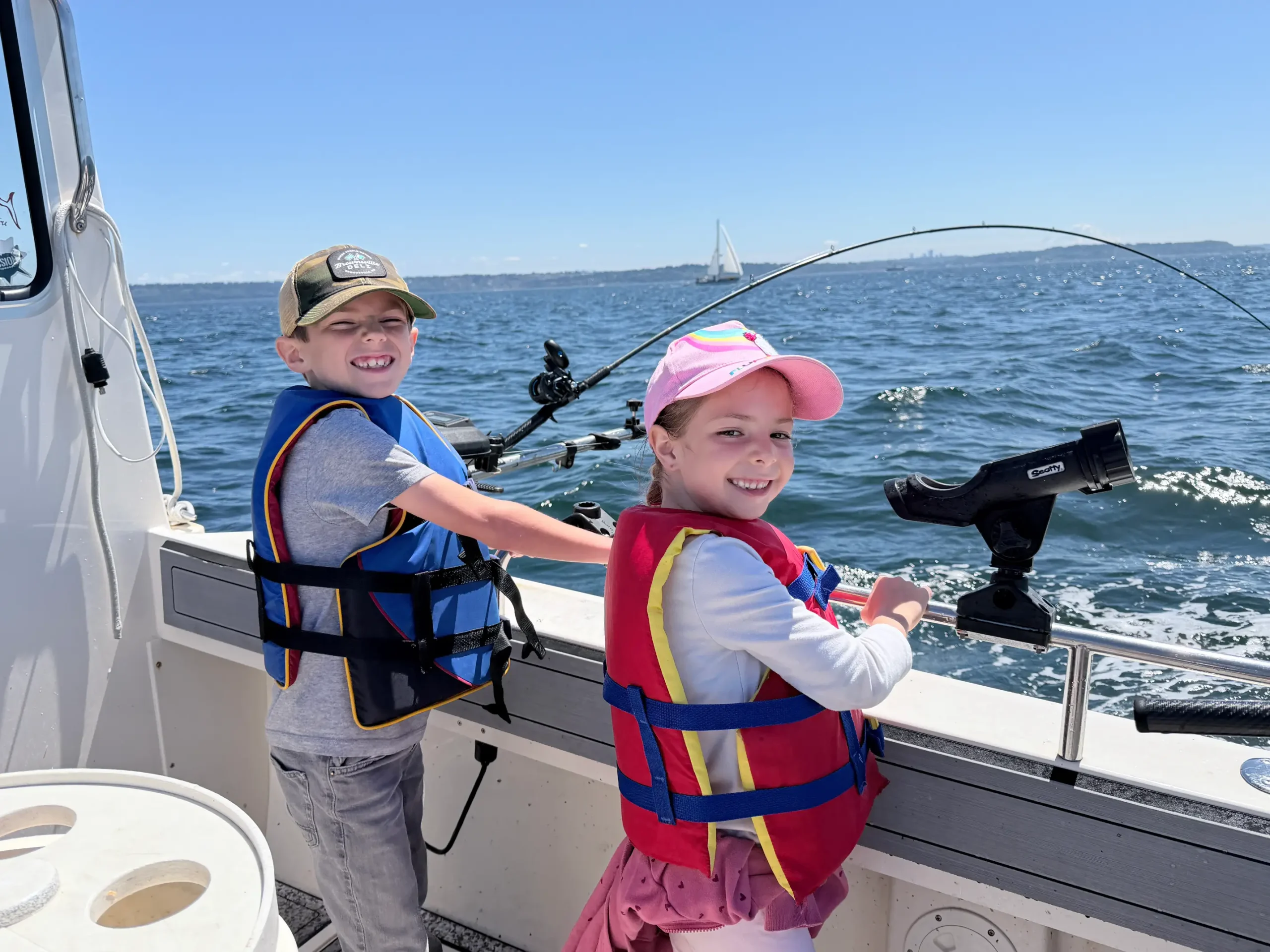
Courtesy Photo: Salmon fishing and crabbing in Puget Sound this summer
And that experience made me think about the difference in how we treat certain health issues for men.
A man experiences erectile dysfunction. Is it age? Hormones? Circulation? Stress? Ultimately, it doesn’t seem to matter because we’ve invested in understanding the problem and finding solutions. There is a famous little blue pill, it’s widely available, and nobody seems particularly embarrassed to advertise it during a football game.
I have a hard time imagining a pharmacist handing a man Viagra and joking that there must be a lot of sexually inadequate men in Santa Fe.
Women deserve that same dignity—and that same urgency. We deserve research that takes our quality of life seriously, healthcare professionals who understand this transition and reliable access to the treatments that work for us.
I’ve learned some of those lessons the hard way.
Take frozen shoulder. My shoulder pain became so severe that I couldn’t blow-dry my hair or put on my seatbelt without wincing and sometimes tearing up. You go to the doctor. X-ray: Normal. Still hurts. MRI: Normal. Still hurts. Eventually, I saw an orthopedic specialist and got the diagnosis ChatGPT had suggested months earlier: Frozen shoulder.
For me, estrogen therapy coincided with about a 50 percent reduction in shoulder pain. Then I received cortisone injections in both shoulders.
Life changing. My mobility and range of motion returned, and I’m back playing tennis. Imagine if I had simply accepted: You’re getting older. Your shoulders hurt now.
No.
I wanted my shoulders back. I wanted my tennis racket back. I wanted my life back. That’s really what this conversation is about.
We have no problem preparing our children for puberty. We explain periods, hormones, sex, pregnancy, and changing bodies. When women are pregnant, there are books, classes, specialists and apps that will happily tell us our baby is currently the size of a blueberry.
Then women enter perimenopause and suddenly everyone lowers their voice.
Why?
We shouldn’t turn menopause into another thing women are expected to manage perfectly. Nobody needs to win perimenopause. But we deserve information. We deserve research. We deserve treatment options. And we deserve conversations that aren’t embarrassing, dismissive, or reduced to jokes about “crazy women.”
Because once women actually start talking about this, you hear the same sentence over and over: “Wait. That happened to me too.”

Courtesy Photo: One of my favorite places to be with my family — out on the water, breeze in our hair, soaking up the sun
Maybe that’s how we start passing down the information so many of us never received. My mom handed me a book when I was a girl so I wouldn’t be completely blindsided by puberty. I wish I could sit down with her now and ask what this stage of life was like for her—what surprised her, what she struggled with and what she wishes someone had told her. But her dementia came too soon, and this conversation came too late.
That makes documenting my own experience for my daughter feel even more important. I want her to have what I didn’t: A roadmap, a vocabulary and a mother who is perfectly willing to talk about all of it—upstairs lady parts, downstairs lady parts, and everything in between.
Maybe that’s the same courtesy we should extend to all women. Prepare us for this transition before we’re standing in the middle of it wondering what in the world is happening. Give us the information, research, resources, and treatment options to navigate it—not simply the expectation that we should quietly endure it.
Because this isn’t about refusing to age. It’s about refusing to accept that aging means we should automatically settle for feeling worse. Instead of telling women to slow down or learn to live with it, maybe we start with a much better question: How can we help you keep living the life you want to live?
Because I have no intention of slowing down. I have tennis to play, children to shuttle, aging parents to care for, work I love—and a husband who deserves more than whatever version of his wife the hormonal roulette wheel happens to deliver that day. He deserves a partner who feels good, has energy, wants to be present, and can enjoy this stage of life with him.
And frankly, I deserve that version of myself, too.
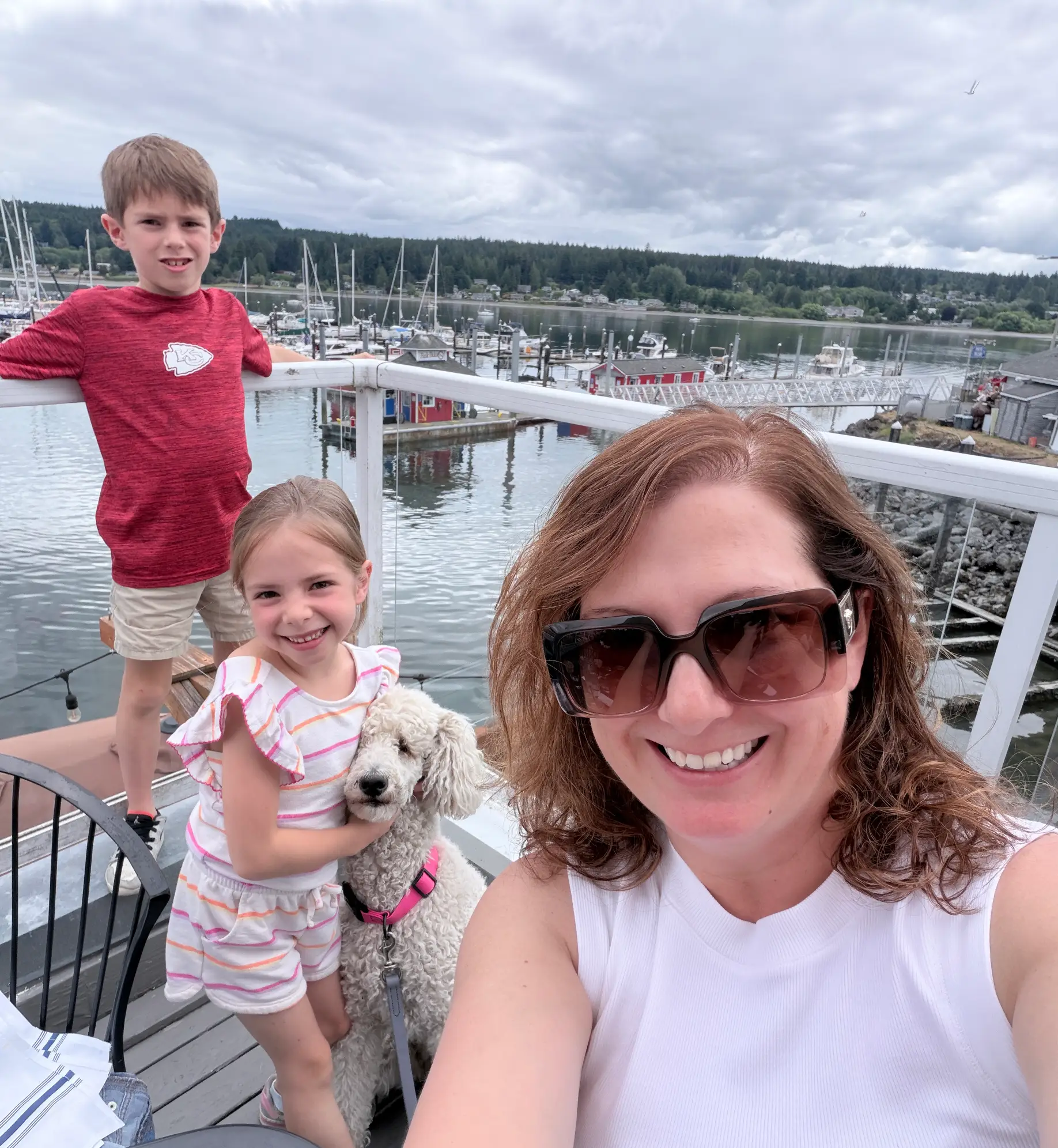
Courtesy Photo: Seattle Trip — Summer 2026
Jen Paul Schroer, Editor, Tumbleweeds Magazine