

Courtesy Photo: Young child skipping rocks.
Fall magic to support children’s emotional well-being
By Dawn Berry
As an early childhood specialist working with families and teachers across northern New Mexico for more than 15 years, I’ve watched the early months of the school year bring a wide range of challenges for children and their families. Some kids have stomachaches the first week of school. Others seem fine in September but start to unravel in October when the novelty wears off and the demands pile up. I hear from parents and teachers not only about back-to-school anxiety, but also about social friction, changing friendships, the weight of new academic expectations, shifting routines at home, and a general sense of unsettledness that can stretch well into fall. The transition into the school year isn’t a single moment. It’s a season.
Here in the high desert, this transition can feel especially intense. Our children spend summers splashing in water, roaming under vast skies, and moving freely through the land. Then, almost overnight, we ask them to trade open trails for classroom seats and boundless freedom for structured days. The emotional whiplash is real.
The good news? Fall in northern New Mexico offers a natural remedy. The golden aspens, harvest traditions, and cooler air create the perfect season for helping kids process anxiety, rebuild security, and strengthen family bonds.
The fall transition asks a lot of children. Emotional stress shows up physically, including stomachaches, headaches, difficulty sleeping, and resistance to school as normal signals of a nervous system working hard to adapt. What helps is predictability, connection, and, especially here, the healing power of fall itself. Nature acts as a powerful regulator for young nervous systems: The sights, sounds, and smells of the season help lower cortisol and support emotional processing.

Courtesy Photo: Family hiking.
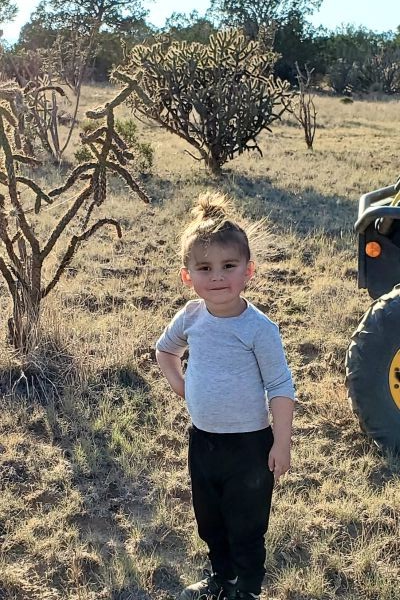
Courtesy Photo: A child hiking.
1. Let the aspens lead the way.
Hiking through the golden aspens is an experience like no other. Santa Fe’s Aspen Vista Trail off Hyde Park Road and the Dale Ball Trails in the foothills are both welcoming to families of all ages and abilities. Try these simple practices on your walk:
Sensory Grounding Walks: Ask kids to name five things they see (quaking golden leaves), four they can touch (crunchy leaves, rough bark), three they hear (wind in the trees), and so on. This “mountain breathing” technique calms the nervous system quickly.
Worry Release Ritual: Have each family member pick up a fallen aspen leaf, whisper a worry into it, and let the wind carry it away.
Short and Sweet: It doesn’t have to be a full hike. Even 20 to 30 minutes on a gentle trail discharges pent-up energy and quiets an overstimulated mind, which is a combination that’s hard to replicate indoors.
2. Harvest traditions build security and connection.
Plan a visit to the Santa Fe Harvest Festival at El Rancho de las Golondrinas. Activities like grape stomping, making ristras, pumpkin picking, and hands-on heritage crafts create joyful shared memories. These traditional experiences do more than entertain. They foster predictability, cultural pride, and family identity at a time when kids crave stability. Talk about the harvest as a reminder that after every change (like summer ending), something new and nourishing follows.
3. Create predictable yet flexible home routines.
Morning Anchors: A consistent breakfast time and a brief, warm send-off consisting of a hug, a high-five, or a shared phrase signals safety and belonging before the school day even begins.
Evening Wind-Down: After dinner, take a short neighborhood or backyard walk as the light softens over the mountains. Follow with reading time or a gratitude share (“The best thing that happened today was…” or “One thing I’m looking forward to tomorrow…”).
Screen Boundaries: Aim to power down screens at least an hour before bedtime. In our high desert climate, sleep can already be harder to achieve; reducing blue-light exposure in the evening gives kids’ nervous systems a genuine chance to wind down.
4. Talk about feelings without amplifying them.
Use age-appropriate language: “It’s normal to feel nervous about new things. Your body is just getting ready.” Validate emotions first, then gently problem-solve. Books like [ITAL]The Kissing Hand[/ITAL] or [ITAL]The Invisible String[/ITAL] pair beautifully with a porch reading as you watch the changing light.
For older kids, journaling or drawing “worry clouds” drifting over the mountains can help externalize fears.
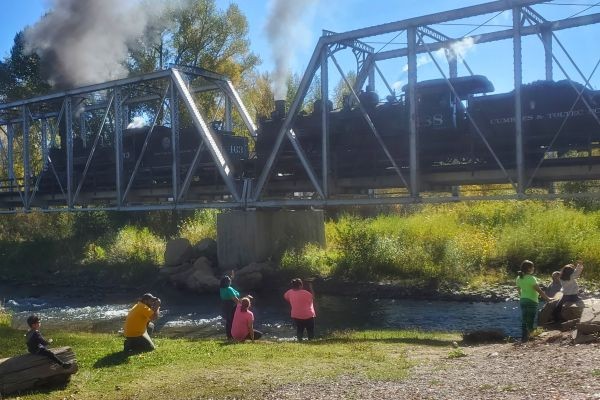
Courtesy Photo: Watching historic train in Chama.
5. Start the day with affirmations.
One of the most powerful and simplest practices I recommend to families is a daily affirmation ritual before school. Words shape how children see themselves, and when repeated consistently, positive statements become part of a child’s inner voice. This is especially meaningful during the fall transition, when self-doubt, social anxiety, and the pressure to perform can quietly chip away at confidence.
Each morning, before your child heads out the door, try saying these affirmations together, out loud, with eye contact, and with intention:
“I am kind. I am brave. I am loving. I will look for the good today. I will be kind to everyone — even those who are unkind to me. I love my family. I love myself. I will be the best me for me, because there’s no one like me.”
Post the affirmations by the door, say them in the car, or weave them into your morning send-off. Over time, these statements move from words a child recites to truths a child carries—not just into school, but throughout the year.
Most children find their footing within the first month of school, especially with consistent routines and emotional support at home. But the early school year can also reveal deeper struggles that deserve professional attention. I always tell families, Trust your instincts. If your child’s distress is affecting sleep, appetite, or daily enjoyment for more than a few weeks, or if they express hopelessness at any point, don’t wait to seek help. Community resources, including Santa Fe Public Schools counselors, local mental health services, and your child’s pediatrician, are all important first contacts. Reaching out early is one of the most protective things a family can do.
As the aspens turn gold and the smell of roasting green chile drifts through open windows, I’m reminded of something I’ve seen again and again in my years working with families: children are remarkably resilient when they feel connected to the adults who love them, to their communities, and to the natural world around them. The same landscapes that brought joy all summer don’t disappear when school starts. They shift, and they keep offering. By stepping into fall with intention, through the trails, the harvest traditions, the quieter rhythms of family life, we give our kids something more lasting than a back-to-school routine. We give them a relationship with the season itself, and with the idea that even in change, there is beauty, and there is ground beneath their feet.
Dawn Berry has dedicated 35 years to working with young children and families. An assistant professor in early childhood multicultural education at New Mexico Highlands University, she draws daily inspiration from her own family, including her husband, their six children, 12 grandchildren, 3 dogs, and 12 horses.