
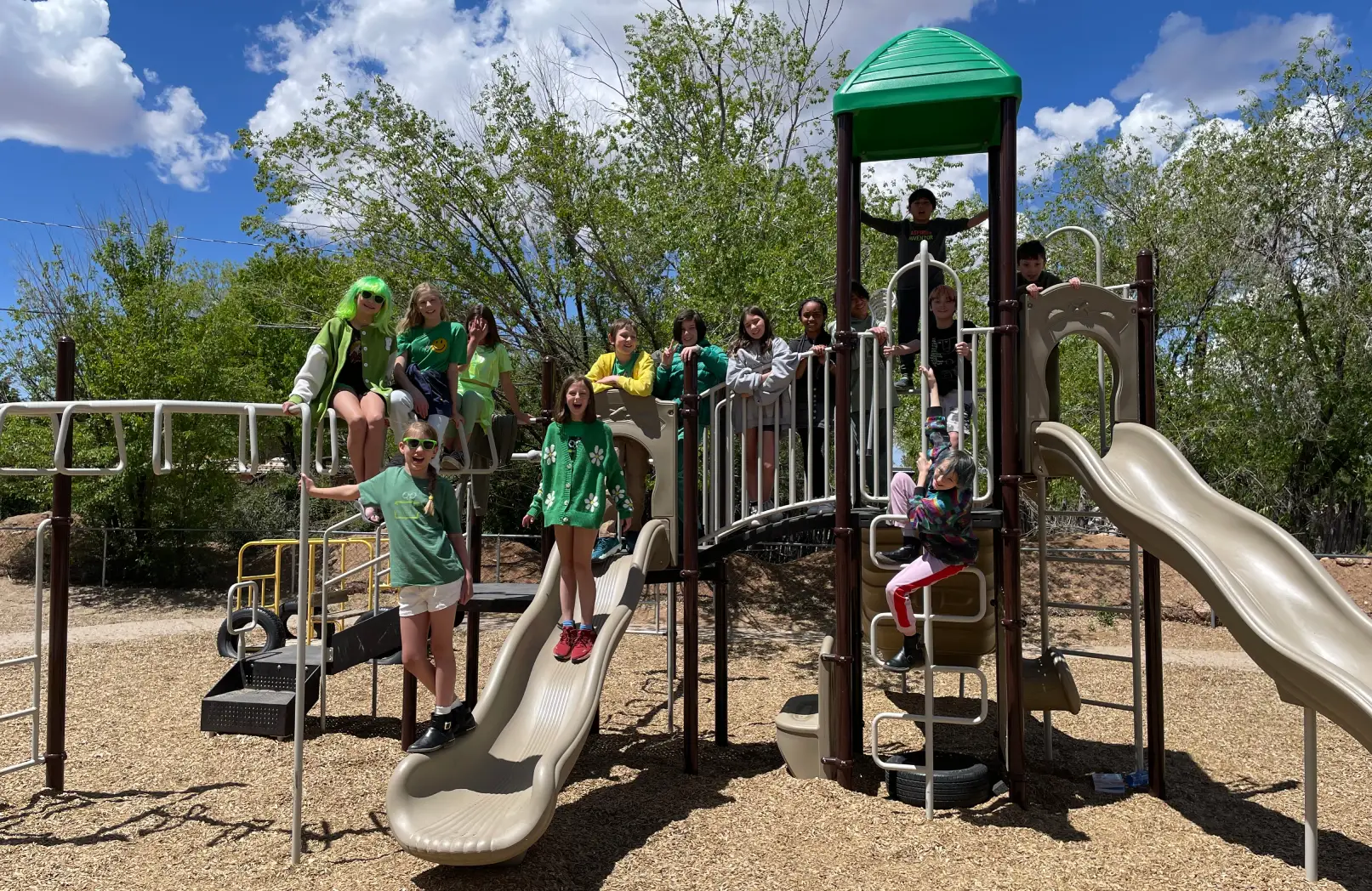
Courtesy photo: Students on the playground at the May Center for Learning.
“For the first time, we understood that our son wasn’t failing to learn. He simply needed instruction that matched the way his brain learns best.”
Written by Parents and Staff of The May Center for Learning
When Louis was in second grade, his parents thought they had done everything right. He attended a respected private school, worked hard, and was surrounded by adults who cared deeply about him. Yet every school day demanded more effort than it should. Reading was exhausting. Writing was frustrating. Homework often ended in tears, and his confidence slowly began to disappear.
In 2021, Louis was diagnosed with dyslexia, dysgraphia, dyscalculia, and ADHD.
“We felt completely overwhelmed,” recalls his mother, Jennice Cote. “We didn’t know where to turn.”
Like many families across New Mexico, they found themselves navigating unfamiliar terminology, conflicting advice, and uncertainty about what would truly help their child succeed.
After extensive research, they enrolled Louis in the May Center for Learning’s six-week LEAP Summer Program, an intensive reading intervention for students with dyslexia and other language-based learning differences.
“For the first time, we felt hopeful,” Cote says. “The growth was almost immediate. But the greatest gift wasn’t just the progress Louis made as a reader. LEAP gave him confidence, and it gave us the knowledge to become effective advocates for our son.”
She credits those six weeks with changing far more than Louis’s reading skills.
“Knowing how to navigate the educational system changes how your child experiences success. I think of LEAP as a six-week investment that equips families with the tools they need to build a strong foundation. Louis still talks about his teachers and how much they believed in him.”
Today, Louis attends the May Center full time.
“We couldn’t be more grateful. Those six weeks changed what our family believed was possible.”
Louis’s story is deeply personal, but it is also remarkably common.
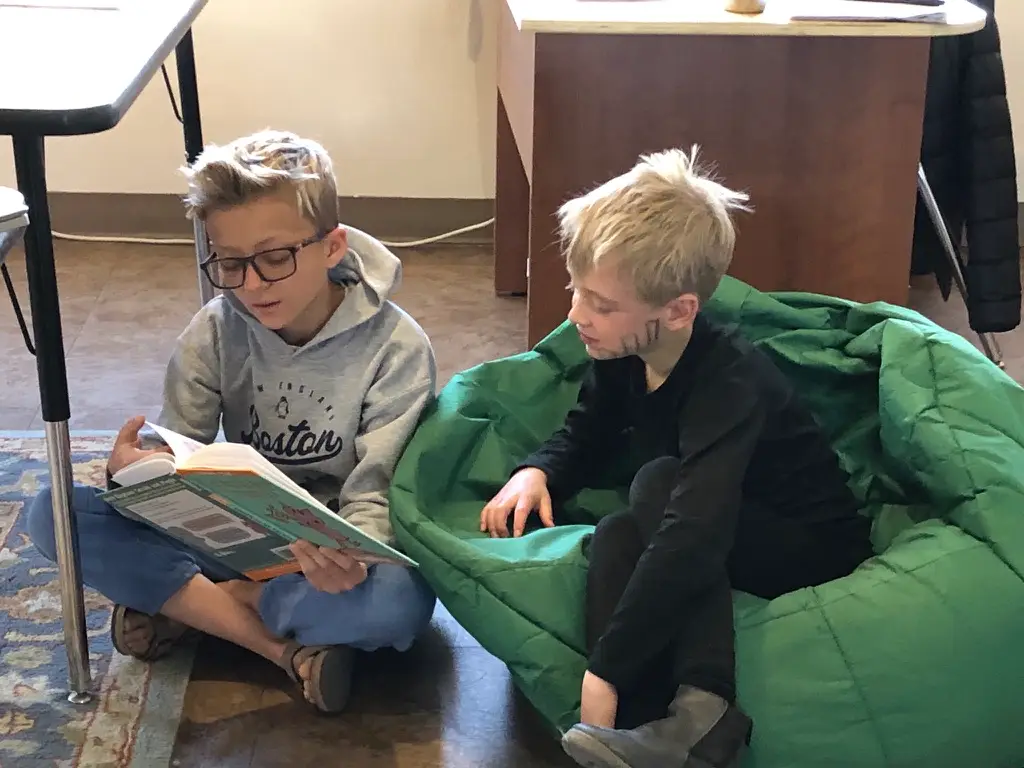
Courtesy photo: Students read together at the May Center for Learning.
Approximately one in five people has dyslexia, making it one of the most common neurobiological learning differences in the world. Yet many children spend years believing they are not smart enough because the adults around them don’t recognize what they’re experiencing.
Across New Mexico, organizations including the Southwest International Dyslexia Association (SWIDA), the Academic Language Therapy Association of New Mexico (ALTA-NM), and the May Center for Learning are working to change that narrative by expanding access to evidence-based instruction, family support, and educator training.
Despite decades of research, misconceptions about dyslexia remain common. Dyslexia is not seeing letters backward. It is not caused by poor teaching, poor vision, or lack of effort. It is a neurobiological difference in how the brain processes written language. Most individuals with dyslexia have average or above-average intelligence and often work significantly harder than their peers to accomplish the same reading tasks.
Researchers at the Yale Center for Dyslexia and Creativity estimate that dyslexia affects roughly 20 percent of the population and accounts for 80 to 90 percent of identified learning disabilities. In a classroom of 25 students, four or five children may have dyslexia, whether it has been identified or not. Many also have ADHD, dysgraphia, or dyscalculia, making early identification even more important.
Children do not “grow out of” dyslexia. They can absolutely become successful readers, but they typically need explicit, systematic instruction grounded in the Science of Reading. Structured literacy and multisensory teaching methods help students build strong reading pathways while preserving confidence and curiosity.
Modern neuroscience has also revealed something equally important. While dyslexic readers often process written language differently, many demonstrate exceptional strengths in visual-spatial reasoning, pattern recognition, creativity, and problem solving. These strengths help explain why so many entrepreneurs, engineers, architects, physicians, artists, and inventors have dyslexia.
Recognizing these strengths does not minimize the challenges dyslexia presents. Instead, it reminds us that supporting children means developing both the skills they struggle with and the talents they naturally possess.
For Erik Foster, who has taught in the May Center’s Summer LEAP program for two summers, those strengths become visible every day.
“Teaching is often described as a profession where we inspire students, but the truth is that our students inspire us just as much,” Foster says. “Every summer, I leave feeling like I have grown not only as an educator but also as a person.”
He says what impresses him most is not simply academic growth.
“The effort each student brings every single day is remarkable. They embrace challenges, encourage one another, and approach learning with determination and resilience. Those qualities are what make lasting learning possible.”

Courtesy photo: Students from the May Center for Learning enjoy a ski day
The greatest impact of early intervention extends far beyond reading scores. By the time many children are identified, they have already begun to question their own intelligence. Receiving a diagnosis often becomes a turning point. Families stop asking, “What’s wrong with my child?” and begin asking, “How does my child learn best?”
Foster says those moments of transformation are among the most rewarding parts of teaching.
“One of the greatest joys is watching a student realize, ‘I can do this,’” he says. “Students who were hesitant readers become more confident. Writers expand their ideas. Children who initially need significant support become increasingly independent and willing to take academic risks.”
He believes those successes reflect more than effective instruction.
“Their progress is a testament not only to their own perseverance, but also to the extraordinary partnership between families, teachers, and support staff who believe in them.”
Fortunately, families in New Mexico no longer have to navigate dyslexia alone. Through conferences, workshops, professional learning, and evidence-based intervention, SWIDA, ALTA-NM, and the May Center for Learning continue building a statewide community dedicated to helping every learner succeed.
That work will continue at events throughout the year hosted by SWIDA, ALTA-NM, and the May Center for Learning in Santa Fe. For more information, visit the organization’s websites. Together, these efforts reinforce an important truth: improving literacy is about far more than teaching children to read. It means empowering families, equipping educators with evidence-based practices, and helping students understand how they learn so they can thrive throughout their lives.
Every child deserves the opportunity to discover that reading can become a strength instead of a struggle. Every child deserves to feel capable, understood, and valued. And every child deserves adults who believe in their potential before they believe it themselves.

Courtesy Photo Watershed Watch
Louis’s story and quotations were generously shared by his mother, Jennice Cote, and are published with permission.