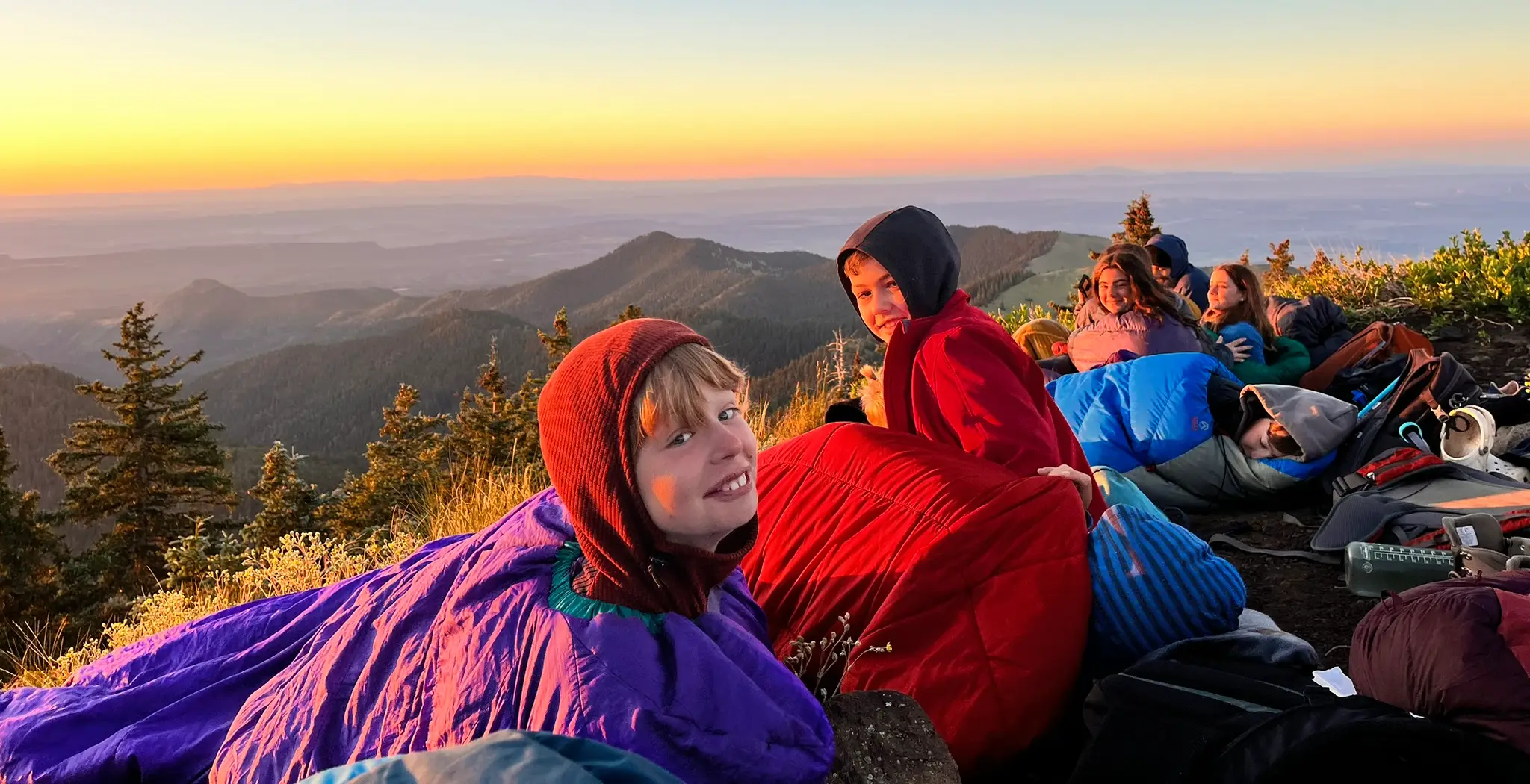
Courtesy Photo. David’s youngest son, Henry, (far left) on top of Mt Taylor for a sunrise summit vista
Now my kids carry on the tradition
By David Salmanson
In June 1979, I flew from New York City to Albuquerque airport to spend a summer in western New Mexico at a summer camp run by the Cottonwood Gulch Foundation out of their base camp near Thoreau. When I climbed down the stairs onto the tarmac—Albuquerque didn’t have jetways yet—I was hit by a blast of hot desert air that instantly chapped my lips. On the long drive west out of Albuquerque I was exposed to a landscape like I had never seen before. When we crossed the Rio Grande, the houses and towns seemed few and far between.
The city of Rio Rancho was barely a blip on the map, population less than 10,000. We passed stark lava fields and a snow-capped Mount Taylor (elevation 11,301 feet). Scrubby piñon and juniper dotted what seemed to me an empty landscape. When we left the highway and turned south towards the base camp that would be my home for the next seven weeks, I could make out ponderosa pines in the distance, where the elevation was higher or water more plentiful. That first night, as I dealt with a lack of electricity and running water for the first time in my life, I had misgivings about my life choices.
Over the next seven weeks, I learned how to chop wood and cook over an open fire, how to set up and take down a tent, and how to choose a good spot on the ground to sleep on. I was a slight kid, always the smallest in my class by at least a head. I was skinny, clumsy, and awkward. But in the wilderness, I gained a new appreciation for what my body could do. A few weeks after driving past Mount Taylor, I climbed to its peak and played in a snow field. I explored Ancestral Puebloan sites at Three Turkey Ruin, Canyon de Chelly, and at Chaco Canyon National Monument. I practically had that last place to myself. My group and an archaeological field school were the only folks there; the road in and out was not yet paved and almost impassable when it rained.
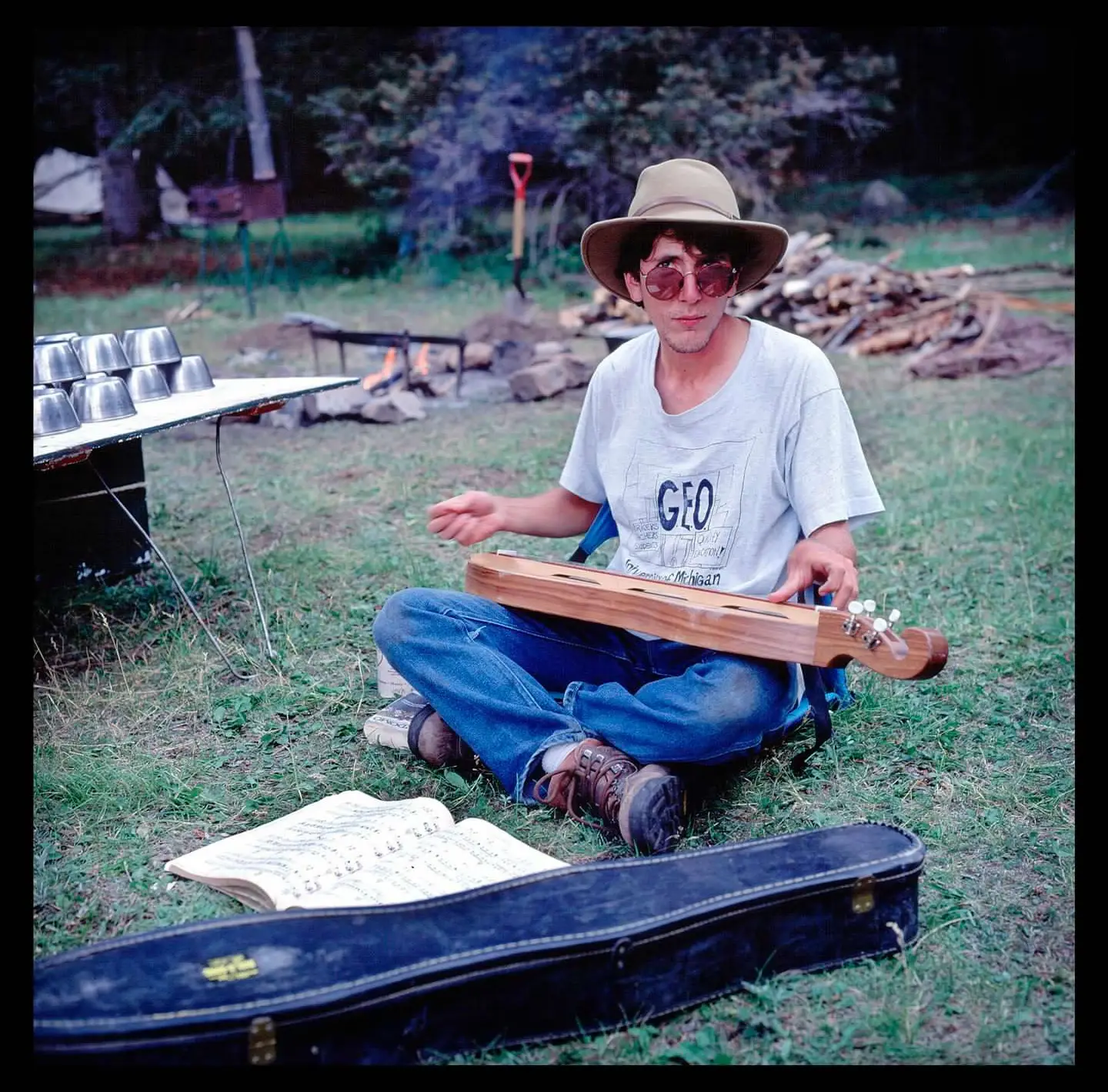
Photo by Bruce Kluckhohn. David Salmanson as a trekker with Dulcimer
I learned that the desert that had seemed so empty was full of life. Horned toads and fence swifts skittered across the sagebrush, innumerable birds roamed the skies, scorpions and rattlesnakes kept me on my toes. Slight changes in elevation or the presence of a spring would completely change the landscape. Water meant bigger animals like rabbits, deer, and elk, as well as new types of trees such as cottonwood and aspen. My group leader, a graduate student who would become one of the foremost paleobiologists in the world, would constantly try to teach us geology and how to read the rocks for both the deep history of the area and what that meant for the landscape today.
I didn’t know it yet, but my time in the wilderness would change my life. Over the next four summers with Cottonwood Gulch, I ranged farther away from the base camp. I backpacked in Colorado, hunkered down in the midday shade of southern Utah’s rock formations, awaiting cooler temperatures to resume my hike. I camped on both forks of the Gila and explored the mountain islands and desert seas of Airzona’s Chiricahua Mountains. The more time I spent in wilderness, the more I learned how to recognize the differences in the landscapes, the marks of human habitations old and new, the intricacies of the ecosystems, and I pondered my place in these webs of existence.
As my teenage years gave way to my twenties, I found myself working at Cottonwood Gulch, helping teenagers learn the lessons I had learned. I went to graduate school at the University of Michigan to study the complex diplomacy of the 19th century frontier, but in my first year a late night. I became, instead, an environmental historian studying the same areas I explored as a kid. Wilderness changed me yet again.
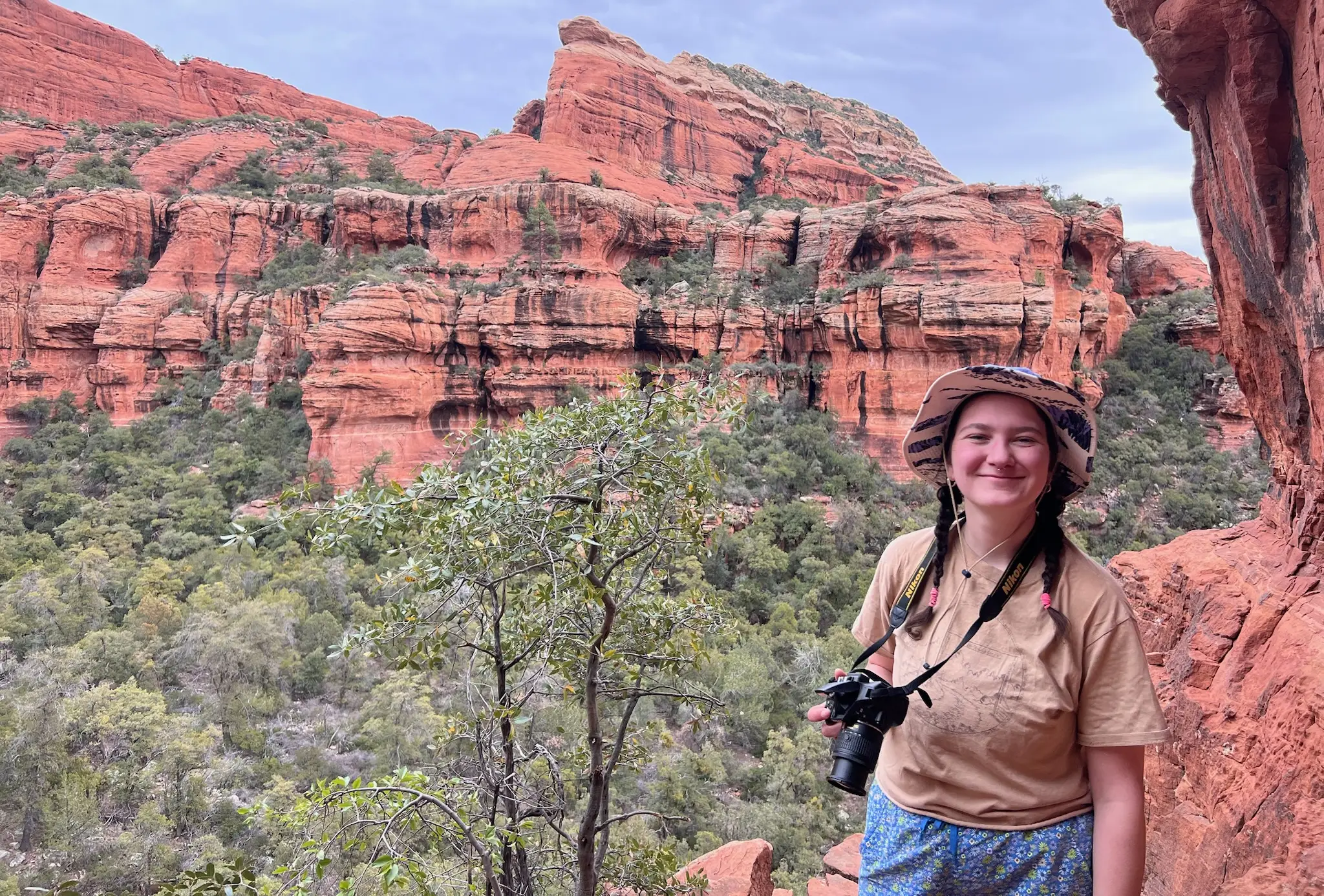
Courtesy photo: David’s daughter, Lenny, in Sedona
When my eldest daughter turned 11, she, too, boarded a plane to Albuquerque, albeit from Philadelphia instead of New York. The drive west on I-40 was different now. Rio Rancho pushed miles west of the Rio Grande, snow on Mount Taylor in late June (much less July) was a rarity, and everywhere there were more people trying to see and do the things I had done. Yet one thing hadn’t changed. My daughter came back from the wilderness a different person. She was more confident, more in touch with her body, and she had picked up the same love of the Southwestern landscapes that had engaged me years earlier. She is on her own journey now, studying geology and the formation of the earth’s crust by analyzing rock samples from the Zuni Mountains, just a few miles from where we both started our camp journeys.
My youngest, now 10, started attending Cottonwood Gulch two years ago. Unlike me and his sister, he has always been athletic. My partner and I joke that he came out of the womb wearing his rock climbing harness. He’s always looking for the next face to climb, river to raft, peak to summit. Yet he, too, has been changed by the wilderness. Unlike his sister and me, school is hard for him. Dyslexia made school his metaphorical wilderness, a place of darkness and fear. Yet in keeping a journal of his activities in the wilds of New Mexico, he has become a more confident student, and he writes with great descriptive power, if imperfect spelling. I don’t know what he will become (currently his future dream job is river guide by day, professional gamer by night), but I know that his time in the wilderness makes him a better person.
So much has changed in the Southwest since I first visited in 1979. The wild places are harder to find now, and often more crowded than they were. But now, more than ever, we need to engage with the wilderness in order to understand it, and through that understanding become better versions of ourselves
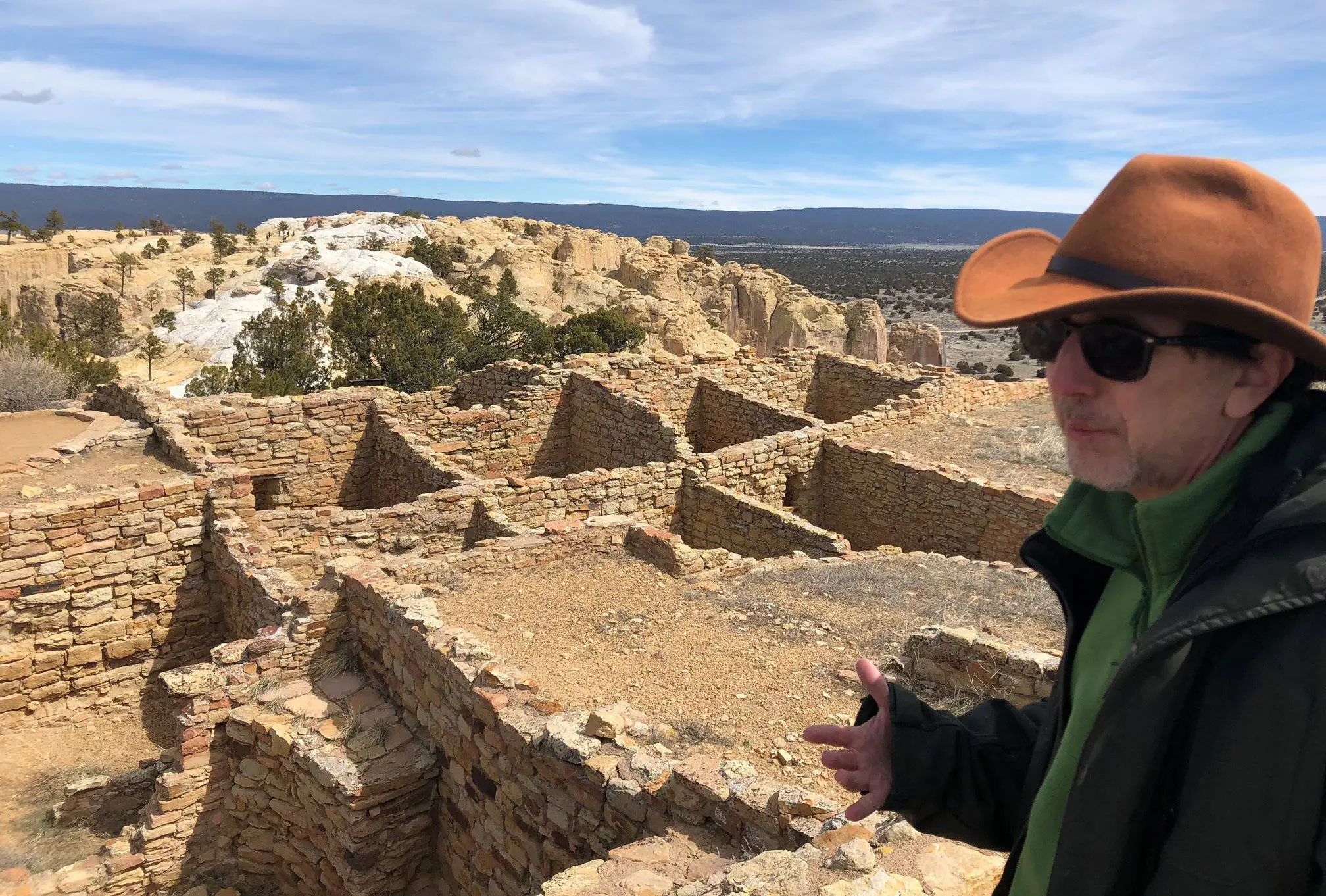
Courtesy Photo: David visiting ancient ruins in more recent years.
David Salmanson is a historian, writer, researcher, and dad, and frequent visiting scholar at Cottonwood Gulch. He can be reached at thewesterndave@gmail.com