
Shared reading strategies
By Robin Lucansky
“Mom, look, there’s a dog that looks just like Winn-Dixie!”
Why is my heart so full of love and wonderment when I hear this from my daughter? For starters, my daughter is 30 years old, and we read [ITAL]Because of Winn-Dixie[/ITAL] together more than 20 years ago. The bond we created while we read the book was strong, mostly due to the phenomenal story by Kate DeCamillo, but also the conversations we had while we read it.
As a veteran elementary teacher and a reading specialist, I know the time spent reading with children is critical. Let’s highlight just a few of the many benefits: It creates shared experiences which strengthen your relationship, increases vocabulary and speaking skills, and creates an empathetic view of the world.
Reading is active. Reading requires cognitive work, which is very different from watching videos (admittedly, I go down the YouTube rabbit hole all too often) or listening to podcasts. That is why the impact of shared reading is so great.
How can you make the most out of your shared reading time? A favorite reading strategy of mine is built around making connections before, during and after reading. This is a very natural way to read with your child, regardless of age. Our brain is “wired” to make connections, we build off what we already know in order to understand, strengthen and grow. Connections are made on various levels. Making a connection to yourself is one level, while making a connection to another text is a bit more complex. When you connect to the world in a larger context, that is the most complex. Here is a simple example of text to self connection: let’s say you have a fish tank at your home. You can use that fact when reading an animal story to make stronger connections with your reading. Since you know your child better than anyone, you can tap into your child’s wiring as you read together. “Hey, the beaver in this story is like our fish, because they spend lots of time under water. But the beaver still needs to breathe air.” The beauty of making connections while reading is that age is not a factor. You can bring connections to books with infants or teens, because connections depend on experiences, not skill level or academics.
How does this strategy work in real life? We’ll look at another favorite book of mine to show how reading with connections creates meaning and growth for your child. Patricia Polacco’s book Thank You, Mr. Falker is an excellent foundation for great conversations.
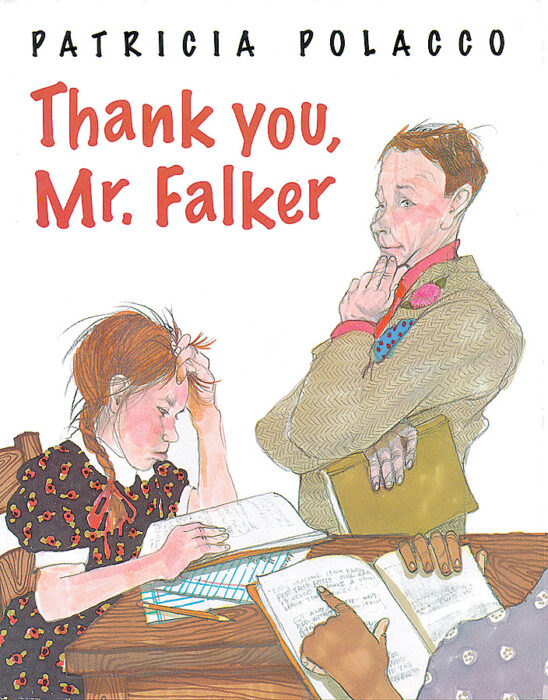
Before you read: Look at the cover of the book and ask your child how the people might be feeling. Why? What clues did you use? Have you ever felt that way? I like to look at the illustrations before I read. It gets my brain active for what will be happening, so feel free to browse the book and perhaps notice there are drawings of the sky and stars. “I wonder why those are in the story?” would be a great prompt to visit at the end of the book. Again, connections made from the conversation is key.
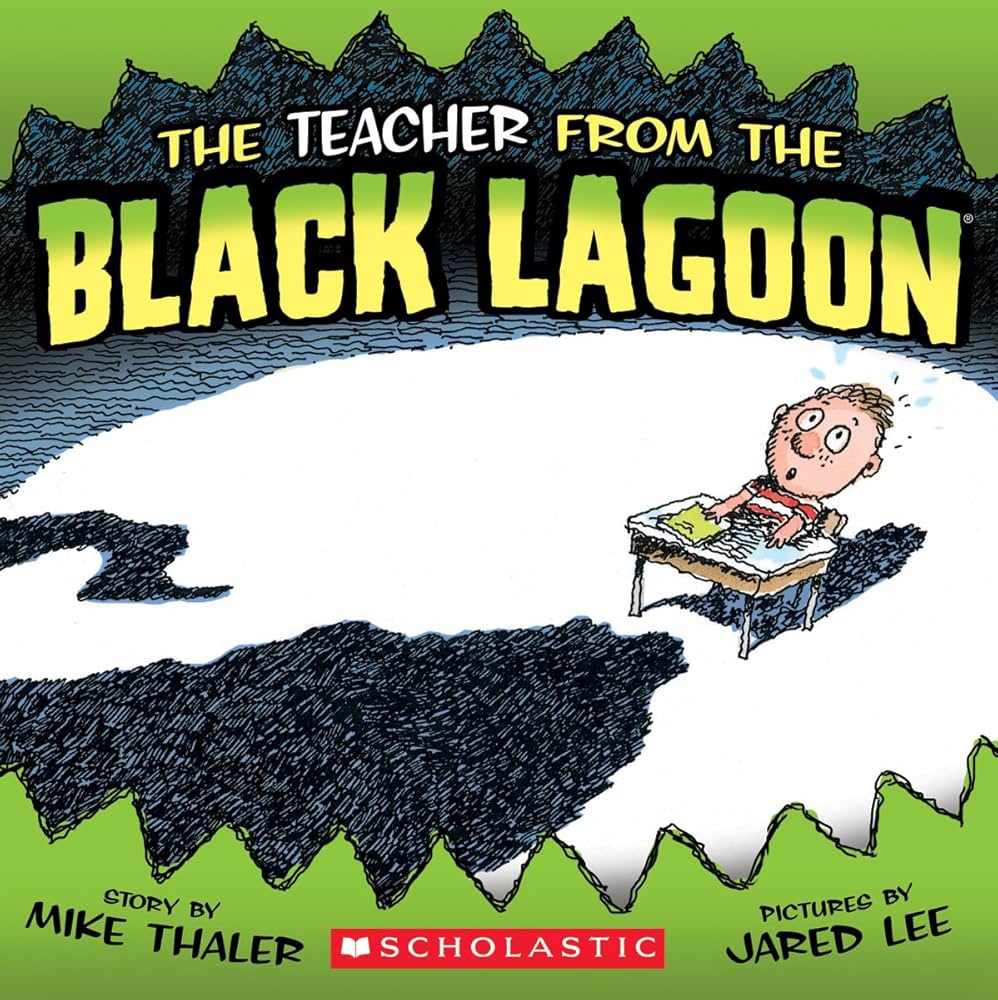
During reading, Notice how your child is reacting to the story. If they are particularly interested in the illustrations, focus on the use of perspective for describing how the characters feel. (Trisha and her grandma have a special relationship and we know that from the pictures.) Do you know a student in your class who might feel like Trisha (text to world question)? In the story, we learn that Trisha’s family moves from Michigan to California. Perhaps your family has experienced a move. Bring that up to create a strong connection to how Trisha would be feeling. When Mr. Falker is introduced in the story, a connection to another book about a teacher can be made: The Teacher From the Black Lagoon (text to text connection).
After you read AND wipe the tears from your eyes, and after you grab some honey to share, ask your child about the stars and the sky. Was the story what they expected? Does Mr. Falker remind them of people they know? Did the ending surprise you? Would you like to be an author or illustrator? Does this remind them of another book?
What I appreciate about a book like Thank You Mr. Falker is the depth of plot. This story can be enjoyed by younger children, when read to them. The illustrations are wonderful, and tell a narrative all on their own. Most kids know or experience challenges in school. This can create powerful connections for younger students. I was introduced to this book in my graduate studies program. It was used as a starting point for the topic of special education in public schools. This is certainly something older children can connect with, given their experiences in the school system.
Sharing with your child how you create your own connections can be extremely valuable as well. Songs from my high school days on the car radio would bring about great stories and connections. I remember when Don Mclean’s “American Pie” song came on the radio and I sang all the lyrics. This really impressed my kids. But, I was able to tell them about how important the song was and how the lyrics were meaningful to my generation. Bottom line, demonstrating how you connect to your own thoughts is such a great way to teach your child how to think through their own experiences.
Summer break is the best time of all to read with your child. Life is less hectic, days are longer and hotter, and reading should remain part of your child’s daily life. There are programs to enjoy this summer. Visit the Sante Fe Library website (santafelibrary.org) to learn about summer reading programs for all ages. Also, readingquestcenter.org offers great support for students.
Yes, this takes time. You won’t breeze through a book in ten minutes. But, conversations about what you read has an incredible impact. Hopefully, your family can find their own Winn-Dixie moment.
Robin Lucansky is a retired elementary school teacher from the Chicago area. She earned a masters as a reading specialist from Saint Xavier University in Chicago and has taught third through sixth grades. Robin loves living in Santa Fe, where she enjoys visits with her adult children and taking lots of dog walks. She is also a substitute teacher and tutor. Contact her at rlucanskyteacher@gmail.com.